
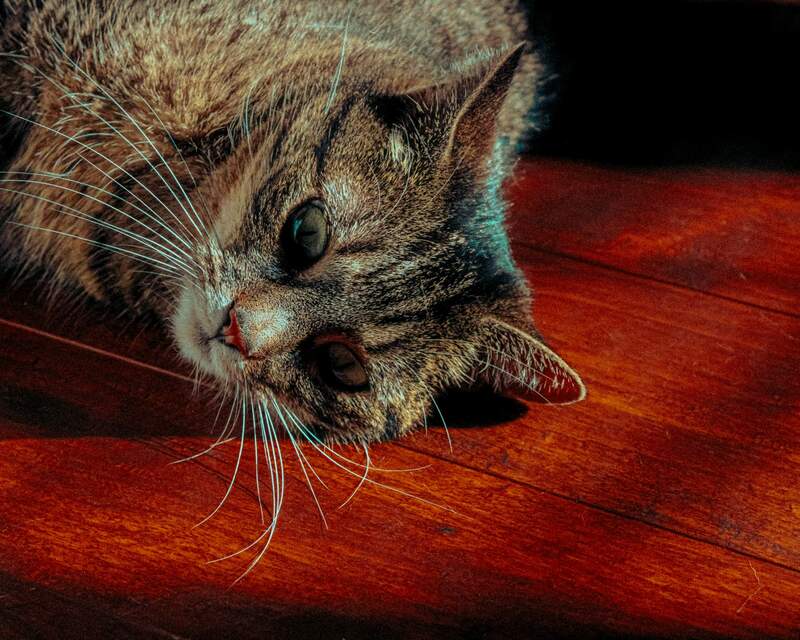
Have you ever looked up from your laptop or book and found your cat staring at you with wide, focused eyes? It can feel as though your feline companion is trying to tell you something without making a sound.
Cats communicate in many ways, and their eyes are an important part of that communication. A stare can mean curiosity, a request for attention, anticipation of food, or uncertainty about something happening nearby. The meaning depends on your cat’s posture, facial expression, and surroundings.
Understanding these signals can help you respond to your cat’s needs and build a stronger bond.
Why Do Cats Stare at Their Owners?
Cats are observant animals. They learn household routines and often pay close attention to the people who feed, play with, and care for them. If your cat regularly stares at you around mealtime, it may have learned that looking at you is one way to get your attention.
Sometimes, however, your cat may simply be watching what you are doing. You might be moving your hands, speaking, reading, or using an object that has caught its interest. A stare does not always have a specific message behind it.
Your cat’s body language provides important clues. A relaxed body and soft facial expression usually suggest a different emotional state from a stiff posture, flattened ears, or an intense, fixed gaze.
Is Your Cat Showing Affection?
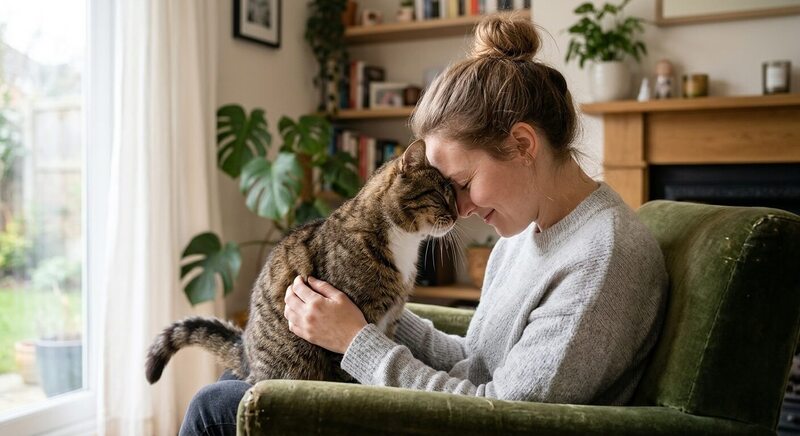
A cat that looks at you with relaxed eyes while resting nearby may feel comfortable in your presence. Some cats enjoy quietly observing their favorite people without necessarily wanting to be touched or picked up.
One familiar sign of friendly interaction is the slow blink. Your cat may look toward you, gradually narrow its eyes, and then open them again. This behavior has been studied by researchers, and findings suggest that slow blinking can play a positive role in communication between cats and humans.
A study published in Scientific Reports found that cats responded to human slow-blinking and were more likely to approach an unfamiliar person after a slow-blink interaction than after a neutral facial expression. You can read the scientific study on slow blinking in cats for more details.
You can try slow-blinking back when your cat appears relaxed. Look in its direction, gently narrow your eyes, close them briefly, and reopen them without forcing the interaction. Your cat may respond, look away, or simply continue resting. All of these responses are normal.
When Your Cat Wants Something
Sometimes, a stare is much more practical than emotional. Your cat may be asking for food, playtime, access to a room, or your attention.
Think about what happens before and after the staring. If your cat watches you near its usual feeding time, walks toward its bowl, or meows while looking at you, it may be anticipating a meal. If it stares and then brings you a toy, it may be inviting you to play.
Cats can also learn that certain behaviors get a response from their owners. If looking at you is regularly followed by petting, treats, or play, your cat may repeat the behavior because it has learned that it works.
Instead of guessing, check your cat’s surroundings and routine. Make sure it has fresh water, a clean litter box, appropriate play opportunities, and a comfortable place to rest.
Could the Stare Mean Fear or Stress?
Not every stare is a sign of affection. A cat that feels uncertain may watch a person, another animal, or an unfamiliar object carefully before deciding what to do.
Look at the whole body rather than focusing only on the eyes. A stiff posture, flattened ears, a tucked tail, crouching, or an attempt to hide may suggest fear or discomfort. Dilated pupils can also occur during excitement or in low light, so they should not be interpreted on their own.
If your cat appears uncomfortable, give it space and allow it to move away. Avoid staring directly at it, reaching toward it suddenly, or forcing physical contact. A quiet environment and access to a safe hiding place can help your cat feel more secure.
If your cat is naturally shy, our guide on how to gain a cat’s trust offers more ideas for encouraging comfortable, positive interactions.
When Staring Could Signal a Health Problem
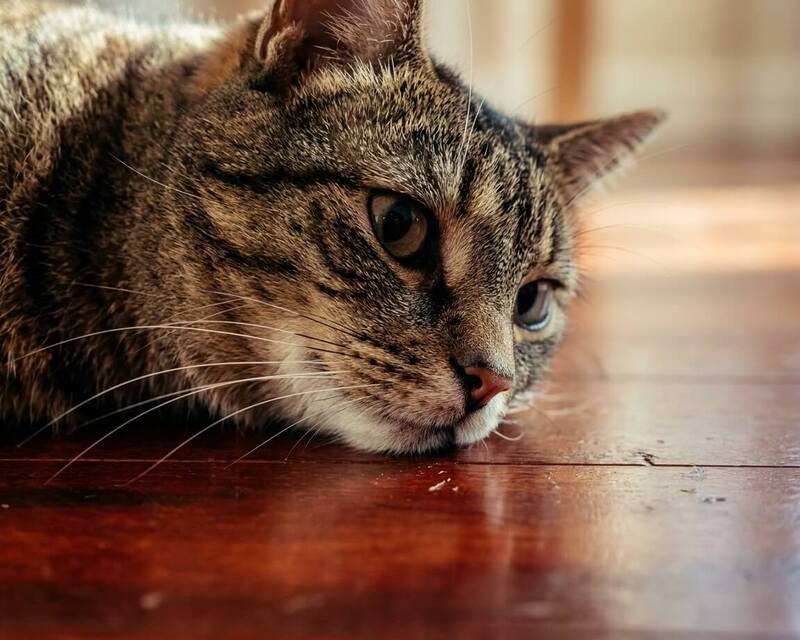
Occasionally, staring may be part of a behavior change that deserves closer attention. If an older cat frequently stares at walls or empty spaces and also seems disoriented, becomes unusually vocal at night, or changes its normal habits, arrange a veterinary checkup.
Sudden changes in behavior can have several causes, including stress, changes in vision, or medical conditions. Contact your veterinarian if the staring is new, persistent, or accompanied by other unusual symptoms.
Eye-related warning signs also matter. If your cat squints, keeps one eye closed, has unusual discharge, or develops cloudy-looking eyes, seek veterinary advice rather than assuming the behavior is simply communication.
How Should You Respond When Your Cat Stares at You?
Start by observing your cat’s expression and posture. If it looks relaxed, you can try a gentle slow blink or speak softly. If it seems to be asking for something, check its basic needs and offer an appropriate activity.
If your cat looks tense or tries to move away, respect its space. Cats differ in how much eye contact and physical interaction they enjoy, so let your individual cat guide the interaction.
Above all, avoid treating every stare as a clear message. Your cat’s gaze is one part of a much larger pattern of communication that includes body posture, movement, scent, and sound.
The next time you catch your cat watching you, take a moment to notice the rest of its body language. A relaxed gaze may be a quiet moment of connection, while a focused stare may simply mean that something has caught its attention. Learning to recognize the difference can help you understand your feline companion and create a more trusting relationship.

Ontaryo articles are collectively researched, written, and maintained by our editorial team to help you keep your pets healthy and happy. Read our editorial policy.