

If you share your home with a cat, you have probably watched them follow a moving patch of sunlight across the floor. As the sunbeam shifts from the rug to the couch, your cat moves with it, eventually curling up for a long nap in the warmest spot in the room.
To us, lying in direct sunlight on a warm afternoon might feel uncomfortably hot. For many cats, however, a sunny windowsill offers a comfortable place to rest. This behavior is usually normal, but understanding why cats seek warmth can help you keep your feline companion comfortable while reducing potential risks.
Why Cats Are Naturally Drawn to Warm Places
Cats generally have a higher normal body temperature than humans, typically around 100.5°F to 102.5°F. Because of this, a room that feels comfortable to a person may feel slightly cool to a cat, particularly when they are resting for long periods.
Sunlight provides a convenient source of external warmth. When cats settle down for a nap, they move less and may prefer a warm surface that helps them remain comfortable without needing to generate as much body heat.
Cats also have natural preferences for cozy, sheltered resting places. A sunny windowsill, a soft blanket, or a warm patch of carpet can offer a combination of warmth, comfort, and a good view of the surrounding environment.
Although domestic cats have evolutionary connections to wildcat ancestors adapted to warm climates, sunbathing is not explained by their ancestry alone. Individual preferences, indoor temperatures, daily routines, and the availability of comfortable resting places can all influence where a cat chooses to sleep.
Why Older Cats May Seek Extra Warmth
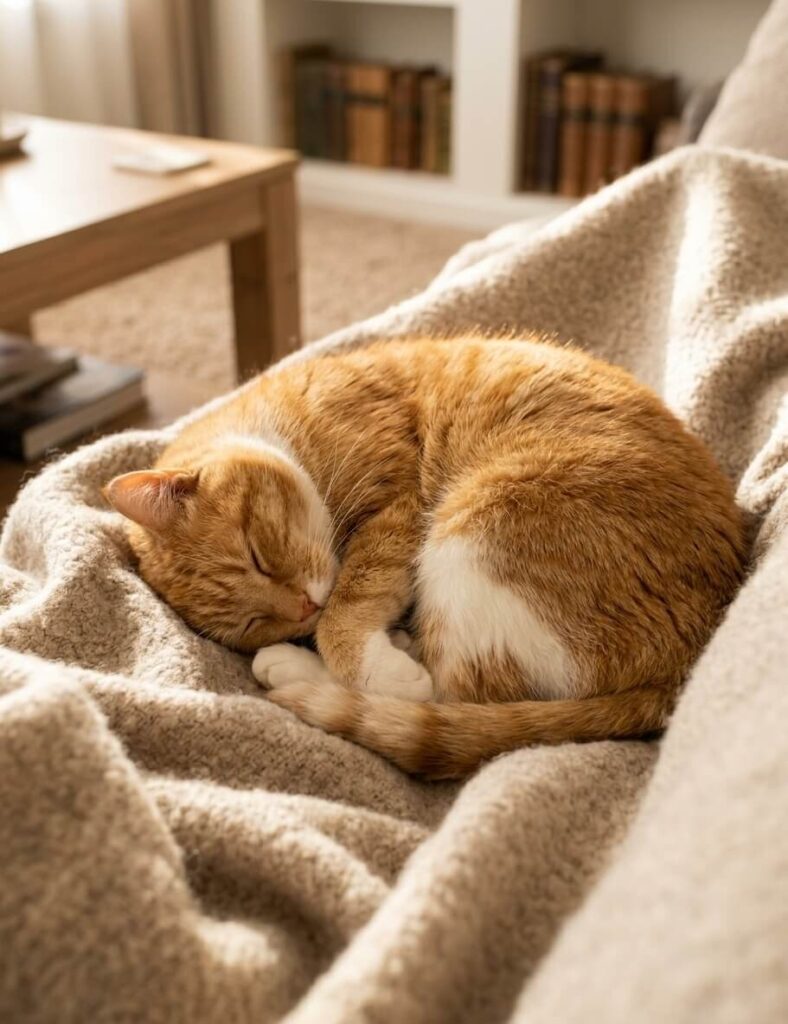
Senior cats sometimes spend more time resting in warm, comfortable places. Cats with stiff joints or age-related mobility problems may also prefer soft, easily accessible sleeping areas.
Gentle warmth can feel soothing, but sunlight is not a treatment for arthritis or other medical conditions. If your older cat has difficulty jumping, walks stiffly, avoids stairs, or seems reluctant to move, arrange a veterinary examination rather than assuming they simply need a warmer bed.
You can make resting easier by providing a padded bed in a quiet, accessible location. If your cat enjoys a sunny window, ensure they can reach the resting spot without making difficult jumps.
The Hidden Risks of Too Much Sunlight
Although sunbathing is a common feline behavior, prolonged exposure can create problems, especially during hot weather or when a cat cannot easily move away from the heat.
Overheating and dehydration
A sunny window can become significantly warmer than the rest of the room. Cats need access to fresh water and a cooler place to retreat if they become too warm. Cats that are elderly, overweight, or affected by certain medical conditions may be more vulnerable to heat-related problems.
Watch for unusual panting, excessive drooling, weakness, vomiting, or collapse. These can be signs of heatstroke, which requires immediate veterinary attention. Move your cat to a cooler area and contact a veterinarian urgently if you notice these symptoms.
Sunburn and skin damage
Cats with white or pale-colored fur, unpigmented skin, and thin hair around the ears and nose are particularly vulnerable to sun damage. Repeated ultraviolet exposure can cause solar dermatitis, which may begin with redness, scaling, or crusting and can sometimes progress to skin cancer.
Indoor cats are not automatically protected from all sun-related skin damage simply because they spend most of their time inside. If your cat has pale ears or a pink nose and regularly sleeps in direct sunlight, consider providing a shaded alternative.
The VCA Animal Hospitals guide to solar dermatitis in cats explains the risks of prolonged sun exposure and the importance of protecting vulnerable skin.
Simple Ways to Keep Your Cat Safe While Sunbathing
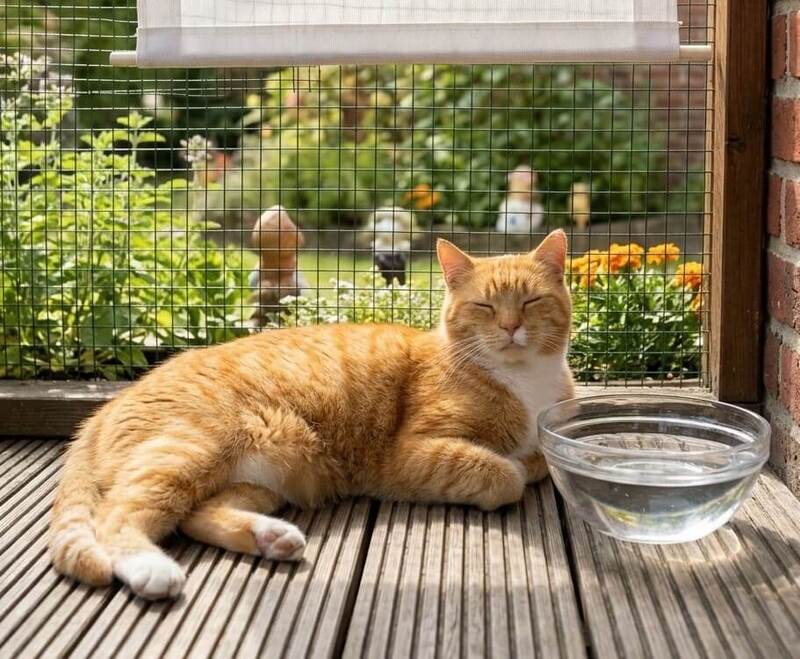
You do not necessarily need to block every sunny window or prevent your cat from enjoying a warm nap. A few practical adjustments can make their favorite resting spot safer.
1. Provide both sunny and shaded resting places. Let your cat choose between a warm window perch and a cooler bed away from direct sunlight. Make sure they can leave the sunny spot whenever they want.
2. Keep fresh water available. Place clean water in an accessible location and consider offering several water stations around the home. Some cats prefer drinking from a fountain, while others prefer a wide, shallow bowl.
3. Monitor the room temperature. Pay attention to rooms that become especially hot during the afternoon. Use ventilation or air conditioning when needed, and ensure your cat can reach a cooler area during hot weather.
4. Protect vulnerable skin. If your cat has pale ears, a pink nose, or areas with sparse fur, ask your veterinarian about suitable sun protection. Never apply human sunscreen without checking that it is safe for cats.
5. Make windowsills comfortable and secure. A stable resting surface helps prevent falls, especially for older cats. Ensure window screens are secure and that open windows cannot create a risk of falling or escape.
If your home also includes a dog, you may find our guide on how to keep dogs cool in summer useful for managing indoor temperatures and warm-weather comfort for both pets.
When Should You Be Concerned About Your Cat’s Sunbathing?
Enjoying sunlight is usually harmless when a cat can move freely between warm and cool areas. However, changes in behavior deserve attention.
If your cat suddenly seeks unusual amounts of warmth, appears lethargic, drinks noticeably more or less than usual, or shows signs of discomfort when moving, speak with your veterinarian. Redness, scabs, sores, or persistent crusting on the ears and nose should also be checked, particularly in light-colored cats.
The Cornell Feline Health Center’s feline heat safety guide recommends providing cats with fresh water and access to shaded, cooler areas, especially during hot weather.
Your cat’s habit of following sunbeams can be a perfectly normal part of daily life. By providing comfortable resting places, fresh water, shade, and protection from excessive heat and ultraviolet exposure, you can help your feline friend enjoy those sunny naps more safely.

Ontaryo articles are collectively researched, written, and maintained by our editorial team to help you keep your pets healthy and happy. Read our editorial policy.
Comments
One response
[…] additional ideas about feline comfort and behavior, explore our guide to why cats seek sunlight and how to keep sunbathing safe. Providing comfortable resting areas and respecting your cat’s preferred routines can support […]