
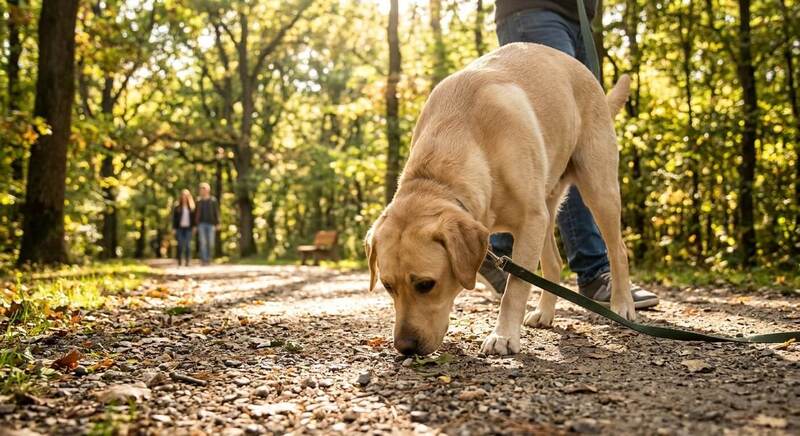
Have you ever taken your dog for a walk and barely made it down the street because it wants to sniff every tree, patch of grass, and fence post? Although this behavior can sometimes slow you down, sniffing is a natural and important way for dogs to explore the world.
Dogs rely heavily on their sense of smell to gather information about their surroundings. A simple sniff can help them investigate unfamiliar places, detect scents left by other animals, and discover things that humans might not even notice.
Understanding why dogs sniff everything on walks can help you make daily outings more enjoyable and rewarding for your pet.
Why Do Dogs Sniff Everything?
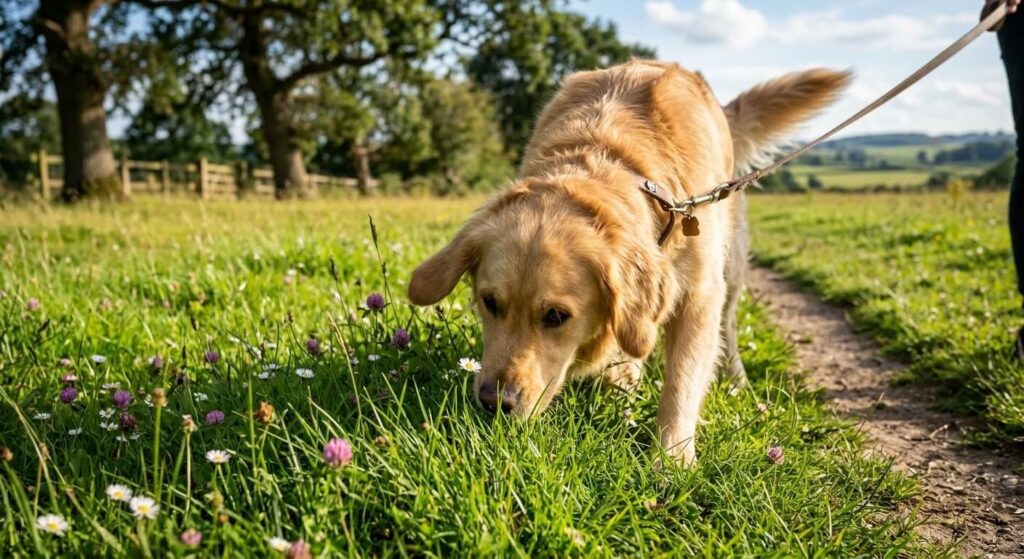
A dog’s nose is one of its most important tools for understanding the environment. When your dog stops beside a tree, a patch of grass, or a sidewalk, it may be detecting traces of other animals, people, food, or unfamiliar scents.
They Discover Other Animals
Dogs often investigate places where other dogs have walked or marked their territory. These smells provide information about animals that have recently visited the area.
A spot that seems ordinary to you may contain many interesting scents for your dog. This is why dogs sometimes return to the same places during every walk.
They Explore Their Surroundings
New parks, walking trails, and neighborhoods offer plenty of unfamiliar smells. Sniffing allows dogs to investigate these places at their own pace.
Even familiar routes can provide new information because animals move around and environmental scents change throughout the day.
For more information, read VCA Animal Hospitals’ guide to how dogs use smell.
Does Sniffing Provide Mental Stimulation?
Yes. Sniffing encourages dogs to investigate their surroundings and process information through their sense of smell. This can provide valuable mental enrichment alongside physical exercise.
A walk does not always need to focus on distance or speed. Giving your dog time to explore appropriate areas can make an ordinary outing more interesting.
Some dogs may seem more settled after a walk that includes relaxed sniffing, although every dog is different. Sniffing should complement regular exercise rather than replace all physical activity.
Should You Let Your Dog Sniff During Walks?
In most situations, yes. Allowing safe sniffing opportunities lets your dog perform a natural behavior and explore its surroundings.
However, dogs should not be allowed to investigate potentially dangerous objects or wander into unsafe areas. The goal is to balance exploration with safety and good leash manners.
Try these simple tips:
- Allow exploration: Give your dog time to sniff in safe areas instead of pulling it away from every interesting smell.
- Teach a cue: Use a phrase such as “let’s go” when it is time to continue walking.
- Choose safe routes: Avoid rubbish, unknown food, animal waste, and areas close to traffic.
- Adapt to your dog: Puppies, older dogs, and energetic adult dogs may have different walking needs.
You can also alternate between relaxed sniffing walks and walks focused on exercise or reaching a destination. This helps your dog enjoy exploration while allowing you to maintain a manageable routine.
If you want to strengthen your relationship with your pet, read our guide on how to bond with your dog.
How to Encourage Safe Sniffing at Home
When outdoor walks are not practical, you can provide scent-based activities indoors. These simple activities can help keep your dog engaged even on rainy days or when you have limited time for a longer walk.
Try hiding a few pieces of your dog’s usual treats in easy-to-find locations around a room. Encourage your dog to search and gradually make the activity more challenging.
You can also use a suitable snuffle mat, provided you supervise your dog and follow the product’s safety instructions.
Start with simple activities so your dog can succeed. Keep small objects, unsafe foods, and anything your dog might swallow out of reach. Always supervise scent games and stop if your dog becomes frustrated or overly excited.
The American Kennel Club’s dog training and behavior resources offer additional ideas for encouraging healthy canine behavior.
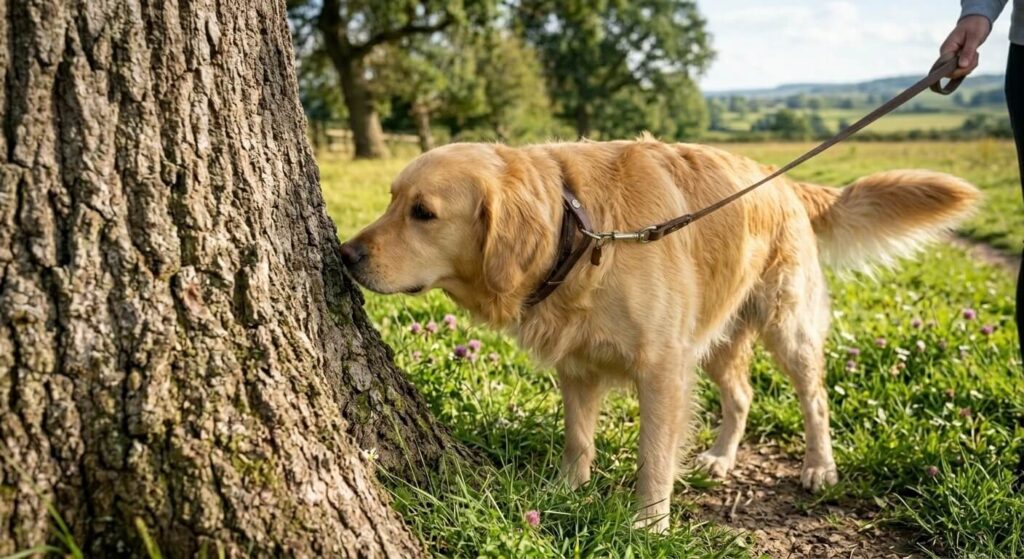
When Should You Be Concerned?
Frequent sniffing during walks is usually normal. However, pay attention if your dog’s behavior changes suddenly or is accompanied by other symptoms.
Contact your veterinarian if your dog develops persistent sneezing, unusual nasal discharge, nosebleeds, difficulty breathing, or obvious discomfort. You should also intervene if your dog repeatedly tries to eat unknown objects or potentially harmful substances outdoors.
If your dog seems frightened or overwhelmed, give it space and avoid forcing it toward unfamiliar people, animals, or objects. Choose a quieter route if necessary and allow your dog to explore at a comfortable pace.
It is also important to distinguish normal curiosity from repeatedly sniffing one particular area while appearing distressed. If this behavior is unusual for your dog or continues alongside other symptoms, ask your veterinarian for advice.
Making Every Walk More Enjoyable
Dogs sniff everything on walks because their sense of smell helps them explore, gather information, and understand their surroundings. This natural behavior can also provide mental stimulation and make everyday walks more rewarding.
Instead of treating every stop as a distraction, try to see the walk from your dog’s perspective. A few minutes spent investigating a scent can be an important part of its outdoor experience.
Give your dog regular opportunities to sniff safely while maintaining appropriate exercise, leash manners, and awareness of outdoor hazards. Be patient when your dog needs extra time to investigate, but use a consistent cue when it is time to move on.
With a balanced routine, you can support your dog’s natural instincts while making walks more enjoyable for both of you. Sometimes, allowing your dog to slow down and explore is one of the simplest ways to enrich its everyday life.
Ontaryo articles are collectively researched, written, and maintained by our editorial team to help you keep your pets healthy and happy. Read our editorial policy.