

Many people believe that cats and dogs are natural enemies, but that is not always true. With the right introduction, patience, and a safe home environment, many cats and dogs can learn to live together peacefully. Some even develop close bonds, playing together, sleeping near each other, and enjoying one another’s company.
However, a successful relationship does not happen overnight. Cats and dogs communicate differently, and their individual personalities, previous experiences, and instincts can influence how they respond to each other. Understanding these differences is the first step toward helping your pets feel comfortable and secure.
Understanding the Differences Between Cats and Dogs
Cats and dogs have different ways of communicating, playing, and responding to unfamiliar animals. Dogs may approach another pet enthusiastically, while a cat may prefer to observe from a distance before deciding whether to interact.
A dog that wags its tail may be excited, alert, or overstimulated. Similarly, a cat’s tail movements can indicate different emotions depending on the situation. These signals should always be considered alongside the animals’ posture, facial expressions, and overall behavior.
Some dogs have a strong instinct to chase small, fast-moving animals. This can make introductions more challenging, particularly if the dog becomes intensely focused on the cat. Other dogs are naturally calm around cats and may adjust more easily.
Cats also differ in temperament. Some are curious and confident, while others need considerable time and space to feel safe around a new animal.
The goal is not to force a friendship. Instead, give both pets the opportunity to become familiar with each other at a pace that feels comfortable and safe. The American Kennel Club’s guide to helping dogs and cats live together offers additional advice on making introductions and encouraging calm behavior.
Phase One: Introduce Their Scents Before Face-to-Face Contact
Before allowing your cat and dog to meet directly, help them become familiar with each other’s scent. This gradual approach can reduce the stress of encountering an unfamiliar animal.
Start by keeping the pets in separate areas of your home. Give each animal its own food and water bowls, resting area, toys, and access to a litter box where appropriate.
You can exchange bedding or gently rub a clean cloth against one pet and place it near the other pet’s resting area. Allow each animal to investigate the scent without forcing interaction. If either pet appears uncomfortable, move the item farther away and try again later.
Once both animals seem relaxed around each other’s scent, allow them to become aware of each other through a closed door. You can also feed them on opposite sides of the door, beginning at a comfortable distance so neither feels threatened.
For more detailed instructions, read our guide on how to introduce a cat to a dog safely.
When both pets are comfortable, you can gradually introduce controlled visual contact using a sturdy pet gate or another secure barrier. Keep the first sessions short and positive, and never force either animal to approach.

Phase Two: Arrange Calm, Supervised Meetings
Once your pets tolerate seeing each other through a barrier, you can begin carefully managed face-to-face introductions.
Choose a quiet room with enough space for both animals to move away from each other. Keep your dog on a secure leash and allow your cat to decide whether to approach, observe from a distance, or retreat to a safe location.
Reward calm behavior with treats and praise. For example, if your dog notices the cat and then looks back at you instead of lunging or chasing, reward that response. This helps teach your dog that remaining calm around the cat is worthwhile.
Keep the first meetings brief. End each session while both animals are still relatively relaxed rather than waiting until one becomes frightened or overstimulated.
Watch for signs of discomfort, including growling, hissing, repeated attempts to escape, intense staring, stiff body posture, lunging, or persistent chasing. If you notice these behaviors, calmly increase the distance between the animals and return to an easier stage of the introduction.
Never punish a cat for hissing or a dog for showing signs of anxiety. These behaviors can communicate discomfort. Instead, identify what is causing the stress and adjust the environment.
Progress should depend on how the animals respond, not on a fixed timetable. Some pets become comfortable within days, while others need weeks or longer.
For additional advice, you can also read the American Kennel Club’s article about whether dogs really hate cats.
Essential Environmental Design for a Peaceful Multi-Pet Home
Even when cats and dogs begin getting along, the layout of your home can make a major difference. Each animal needs access to essential resources and places where it can rest without being disturbed.
Establish Cat-Only Safe Zones
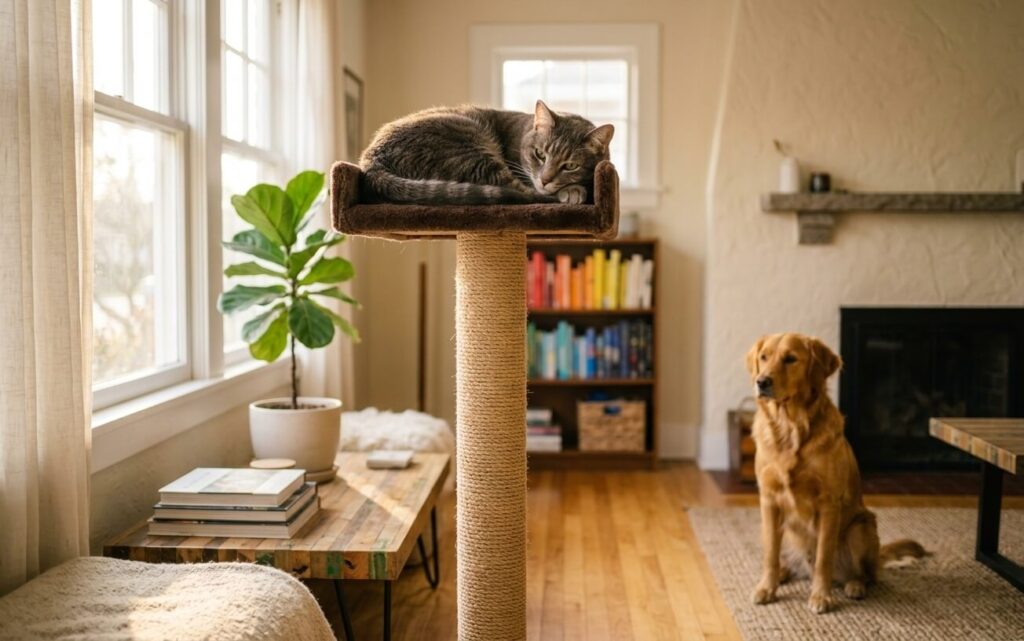
Cats should have access to spaces where dogs cannot follow them. Tall cat trees, sturdy shelves, gated rooms, and elevated resting areas can give cats opportunities to observe their surroundings without feeling trapped.
Make sure your cat can reach its food, water, litter box, and resting areas without having to pass close to the dog. These resources should remain accessible even when the dog is excited or moving around the home.
Prevent Competition Over Food and Other Resources
Food bowls, toys, sleeping areas, and human attention can become sources of tension between pets. Feed your cat and dog in separate areas, especially during the early stages of their relationship.
Keep the cat’s litter box in a location the dog cannot access. Some dogs are attracted to cat food or litter boxes, and this can create unnecessary stress for the cat.
Provide separate resting spaces and avoid making the animals share toys or food. If one pet consistently blocks the other from accessing a resource, adjust the arrangement so both can move around freely.
A peaceful household does not require the pets to share everything. It requires both animals to feel secure and have their own space.
Monitor Body Language and Respect Boundaries
Learning to recognize signs of stress can help prevent conflicts before they escalate.
A cat that repeatedly hides, flattens its ears, lashes its tail, or hisses may need more distance. A dog that stiffens, fixates on the cat, ignores cues, lunges, or repeatedly attempts to chase may not be ready for closer contact.
Relaxed body posture, the ability to look away, and calmly sharing a room without persistent attention toward the other animal are encouraging signs. However, no single behavior guarantees that an interaction is safe.
Understanding your dog’s comfort signals is also important in everyday situations. Our guide to things we do out of love that dogs secretly dislike explains why respecting a dog’s boundaries can help build trust.
Do not force the pets to sit together, share a bed, or interact for photographs. Let them choose when and whether to approach each other.
What If Your Dog Chases Your Cat?
Chasing should be taken seriously, even if the dog appears playful. A large dog can injure a cat accidentally, and repeated chasing may make the cat feel unsafe in its own home.
If your dog begins chasing the cat, separate them calmly using doors or secure barriers. Avoid placing your hands between animals that are fighting or highly aroused. Give both pets time to settle before attempting another introduction.
Return to earlier steps, such as scent swapping and brief visual contact through a barrier. Practice basic cues with your dog, including responding to its name, coming when called, and disengaging from distractions.
If your dog repeatedly fixates on, lunges at, or tries to catch the cat, seek help from a qualified reward-based dog trainer or veterinary behavior professional. Some dogs have a strong prey drive and may never be safe around cats without secure separation.
The cat’s safety must always come first. In some households, permanent separation when the pets cannot be supervised is the most responsible solution.
Building a Lasting Relationship Between Cats and Dogs
A positive relationship develops through repeated experiences in which both animals feel safe. Keep routines predictable, reward calm behavior, and provide regular opportunities for each pet to rest independently.
Avoid comparing your pets with other cats and dogs. One pair may eventually cuddle together, while another may simply learn to share the same home without interacting much. Both outcomes can be successful if the animals are comfortable and their needs are met.
Continue supervising interactions until you are confident that both pets behave calmly and reliably around each other. Even then, use caution if the dog has a history of chasing, guarding, or aggressive behavior. Some pairs may always require separation when people are not present.
If you notice sudden changes in behavior, persistent fear, or repeated aggression, consult a veterinarian to rule out medical causes and discuss appropriate support.
With patience, careful introductions, and a home designed around both animals’ needs, many cats and dogs can learn to coexist peacefully. The most important measure of success is not whether they become best friends, but whether each pet feels safe, comfortable, and respected.

Ontaryo articles are collectively researched, written, and maintained by our editorial team to help you keep your pets healthy and happy. Read our editorial policy.