

Spring brings vibrant color to gardens and parks, creating an inviting environment for outdoor walks with your pet. However, beneath the beauty of seasonal blooms lies a potential hazard for curious dogs. Some popular spring flowers contain natural toxins that can cause digestive problems and, in severe cases, more serious health complications.
Puppies and curious adult dogs may chew flowers, dig up bulbs, or investigate fallen plant material during walks and outdoor play. Knowing which plants may be harmful and recognizing the warning signs can help you protect your dog while still enjoying the beauty of spring.
The Most Dangerous Early Spring Blooms
Several common spring flowers can be toxic to dogs. The level of risk depends on the plant species, the part eaten, and the amount ingested.
| Flower | Main concern | Possible symptoms |
|---|---|---|
| Daffodils (Narcissus) | Toxic alkaloids, especially concentrated in bulbs | Vomiting, diarrhea, abdominal pain; severe cases may involve tremors or heart rhythm problems |
| Tulips (Tulipa) | Toxic compounds concentrated in bulbs | Drooling, vomiting, diarrhea, lethargy |
| Hyacinths (Hyacinthus) | Irritating and toxic compounds, especially in bulbs | Vomiting, diarrhea, excessive drooling, skin irritation |
| Lilies (certain species) | Toxicity varies by species | Effects range from digestive irritation to more serious complications, depending on the plant |
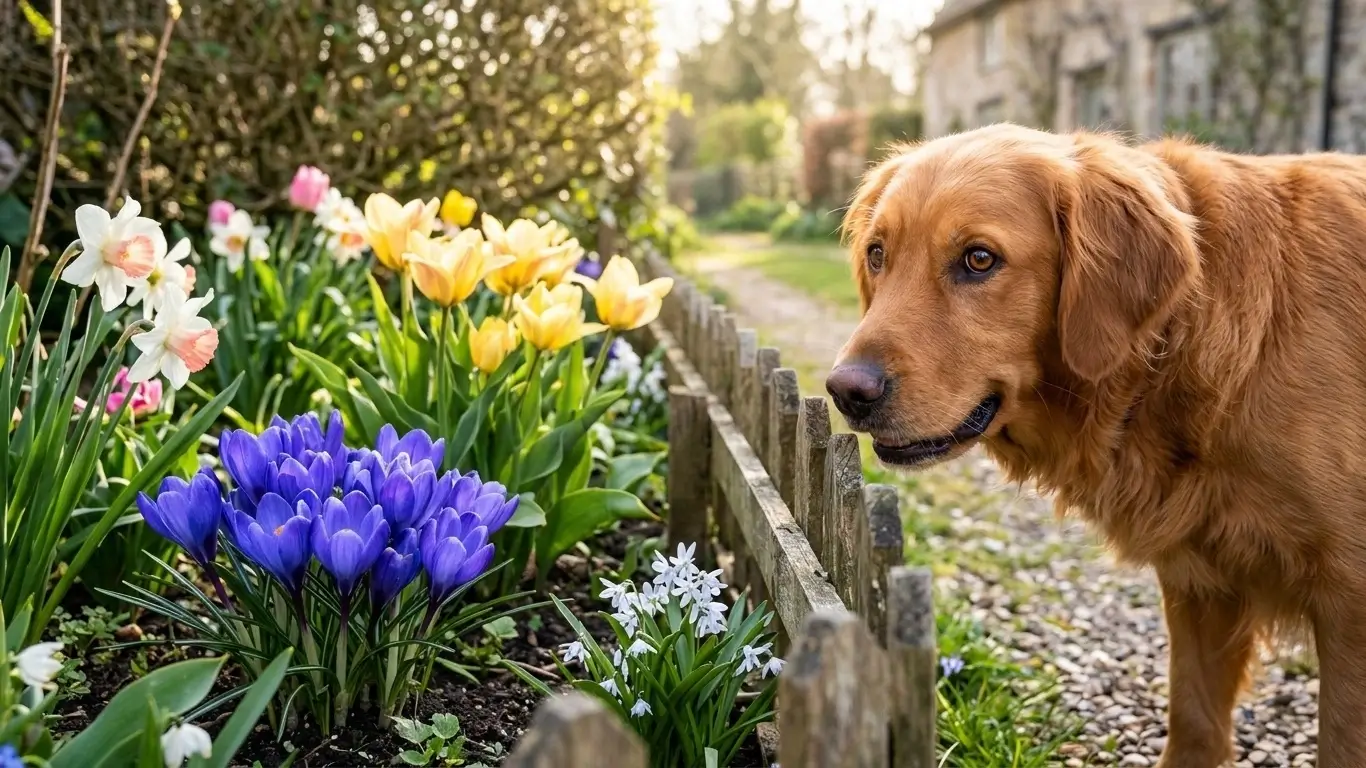
Daffodils, tulips, and hyacinths deserve particular attention because dogs may dig up or chew their bulbs. Keep newly planted bulbs and garden beds inaccessible to pets.
Important: Lily toxicity varies considerably by species, and true lilies are especially dangerous to cats. Do not assume a flower is safe for your dog simply because it is sold as an ornamental plant. If you cannot identify a plant your dog has eaten, contact a veterinarian for guidance.
For a detailed list of plants that can harm dogs, consult Cornell University College of Veterinary Medicine’s guide to toxic plants.
Recognizing the Early Signs of Plant Ingestion
Dogs explore their surroundings through scent and mouth contact, which makes accidental plant ingestion a concern, particularly for puppies and dogs that enjoy digging.
Possible signs of plant poisoning or irritation include:
- Excessive drooling: Your dog may produce more saliva than usual or repeatedly lick its lips.
- Digestive problems: Vomiting, diarrhea, abdominal discomfort, or refusing food may occur.
- Changes in behavior: Your dog may appear unusually tired, restless, weak, or reluctant to move.
- Mouth irritation: Some plants can irritate the mouth and cause pawing at the face or visible discomfort.
- More serious symptoms: Depending on the plant, severe poisoning may cause tremors, breathing difficulties, collapse, or abnormal heart function.
Symptoms vary by plant and exposure. Do not wait for symptoms to appear if you know or strongly suspect your dog has eaten a toxic flower or bulb.
If you suspect ingestion, contact your veterinarian promptly. If possible, take a photograph of the plant or bring a sample in secure packaging so it can be identified. Do not induce vomiting or give home remedies unless a veterinary professional specifically instructs you to do so.
You can also consult the ASPCA Animal Poison Control Center for information about potential toxic exposures.
Safe and Beautiful Alternatives for Dog-Friendly Gardens
You do not need to give up colorful flowers to create a more pet-friendly garden. Several popular ornamental flowers are commonly listed as non-toxic to dogs, including sunflowers, snapdragons, and zinnias.
Flower choices to consider:
- Sunflowers (Helianthus): Bright, cheerful flowers that add height and color to a garden.
- Snapdragons (Antirrhinum): Colorful blooms suitable for borders and flower beds.
- Zinnias (Zinnia): Vibrant flowers available in a wide range of colors.
Even plants considered non-toxic may cause mild stomach upset if a dog eats a large amount. Pesticides, fertilizers, and other garden treatments can also pose risks, so choose products carefully and follow their labels.
Before purchasing a new plant, check its exact botanical name against a reliable pet-toxicity database. Common names can refer to different species, and not every variety has the same safety profile.
Proactive Prevention and Emergency Preparedness
Preventing accidental ingestion is easier than dealing with a potential poisoning emergency. A few simple precautions can make your garden and daily walks safer for your dog.
Keep toxic plants out of reach. Avoid planting toxic bulbs in areas your dog can access. If you already have them in your garden, use secure barriers and supervise your pet outdoors.
Supervise garden exploration. Watch your dog around flower beds, compost, and freshly planted soil. Dogs may dig up bulbs even when the flowers themselves appear untouched.
Practice reliable training cues. Teaching your dog to respond to cues such as “leave it” and “drop it” can help prevent it from chewing plants or picking up fallen flowers. Use reward-based training and practise in calm environments before relying on these cues outdoors.
Be careful during walks. Keep your dog close enough to prevent it from chewing unknown plants along paths, in parks, or around landscaped areas. If your dog is especially curious, a shorter leash near flower beds can help.
Prepare for emergencies. Save your veterinarian’s contact details and learn how to reach an emergency veterinary clinic. Keep photographs of unfamiliar plants when possible, as accurate identification can help a professional assess the risk.
For additional outdoor safety advice, read our guide on why dogs pant so much and how to manage heat safely. You can also explore our tips on how to bond with your dog to learn more about building a trusting relationship through positive, consistent interactions.

What to Do If Your Dog Eats a Toxic Spring Flower
If you see your dog chewing a potentially toxic flower, calmly move it away from the plant and prevent further access. Remove any remaining plant material from its mouth only if you can do so safely.
Next, contact your veterinarian promptly and provide the name or a photograph of the plant, the approximate amount eaten, and when the incident occurred. Do not wait for symptoms before seeking advice.
Do not try to treat suspected poisoning at home with milk, oil, salt, or other remedies. Do not induce vomiting unless instructed by a veterinary professional.
If your dog develops breathing difficulties, collapses, experiences seizures, or becomes severely weak, seek emergency veterinary care immediately.
Keeping Your Dog Safe Throughout Spring
Spring should be a season for enjoyable walks, outdoor play, and time together. By learning to recognize toxic flowers, choosing suitable garden plants, and supervising your dog around unfamiliar vegetation, you can reduce the risk of accidental poisoning.
Remember that plant toxicity depends on the exact species and the amount ingested. When in doubt, keep your dog away from the plant and contact a veterinarian rather than relying on guesswork.
A little preparation can help you create a beautiful outdoor space while making your dog’s safety a priority.

Ontaryo articles are collectively researched, written, and maintained by our editorial team to help you keep your pets healthy and happy. Read our editorial policy.