

While a cat’s breath is rarely expected to smell like sweet mint, a surprisingly pungent or foul odor should not be ignored. Cats are skilled at hiding discomfort, so persistent bad breath may be one of the first signs that something is wrong with their teeth, gums, or general health.
Occasional odor after eating strong-smelling food may be harmless. However, if your cat’s breath consistently smells unpleasant, it is worth investigating the cause rather than trying to cover up the smell. Good oral hygiene can help prevent dental problems, but some conditions require professional veterinary treatment.
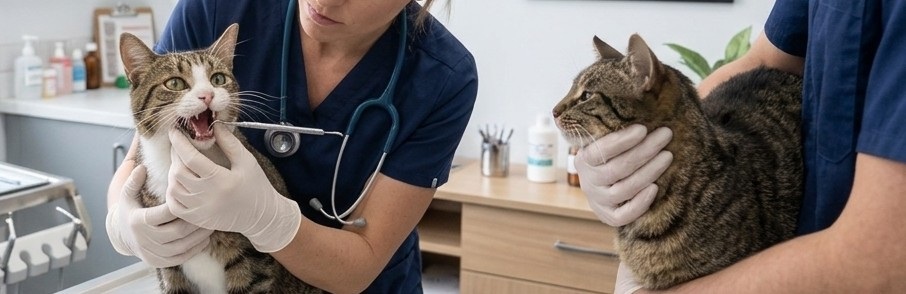
Decoding Feline Odors: What Are You Smelling?
Different breath odors can sometimes provide clues about a cat’s health, but smell alone cannot confirm a diagnosis. A veterinarian needs to assess your cat and determine whether the problem comes from the mouth or another part of the body.
| Odor profile | Possible concern |
|---|---|
| Fishy or rotten smell | Plaque, dental disease, or trapped food |
| Sweet or fruity smell | May be associated with diabetes and ketone production |
| Urine-like or ammonia smell | May indicate kidney-related problems |
| Strong, unusually foul odor | Dental infection, oral lesions, or another health issue |
Do not rely on these descriptions to diagnose your cat at home. If the odor is persistent, worsening, or accompanied by other symptoms, arrange a veterinary examination.
Primary Health Triggers Behind Feline Bad Breath
Periodontal Disease and Tartar Accumulation
Dental disease is one of the most common causes of bad breath in cats. Research summarized by the Cornell Feline Health Center reports that between 50% and 90% of cats older than four years have some form of dental disease.
Plaque is a film of bacteria that forms on the teeth. If it is not regularly removed, it can harden into tartar and contribute to gum inflammation. Over time, untreated periodontal disease may damage the tissues supporting the teeth and cause pain, infection, or tooth loss.
You may notice red gums, drooling, difficulty chewing, or reluctance to eat. Some cats show very few obvious signs, which makes regular veterinary dental checks important.
For more information, read Cornell’s guide to feline dental disease.
Stomatitis and Oral Lesions
Feline gingivostomatitis is a painful inflammatory condition that can affect the gums and other tissues inside the mouth. Cats with this condition may drool, paw at their mouths, avoid food, or show discomfort when chewing.
Mouth ulcers, damaged teeth, and other oral problems can also produce an unpleasant smell. If your cat appears hungry but turns away from food, drops food while eating, or suddenly struggles with meals, do not assume the problem is simply picky eating.
Possible Underlying Health Conditions
Bad breath can sometimes be associated with conditions beyond dental disease. Kidney problems may produce an ammonia-like odor, while diabetes can sometimes cause sweet or fruity-smelling breath. Other illnesses may also affect the mouth or breath.
These odors are only possible clues, not reliable diagnostic tests. A veterinarian may recommend an oral examination, blood tests, or other investigations based on your cat’s symptoms.
Cornell explains more about the possible causes in its article, Bad Breath: Sign of Illness?.
Practical Steps to Improve Your Cat’s Oral Health
A consistent dental-care routine can help reduce plaque buildup and support healthier gums. Introduce new habits gently, and never force your cat to tolerate handling that causes distress.
Be patient when introducing new handling routines, and give your cat time to feel comfortable with the process. Building trust through gentle handling can also help; read our guide on how to make a kitten feel safe.
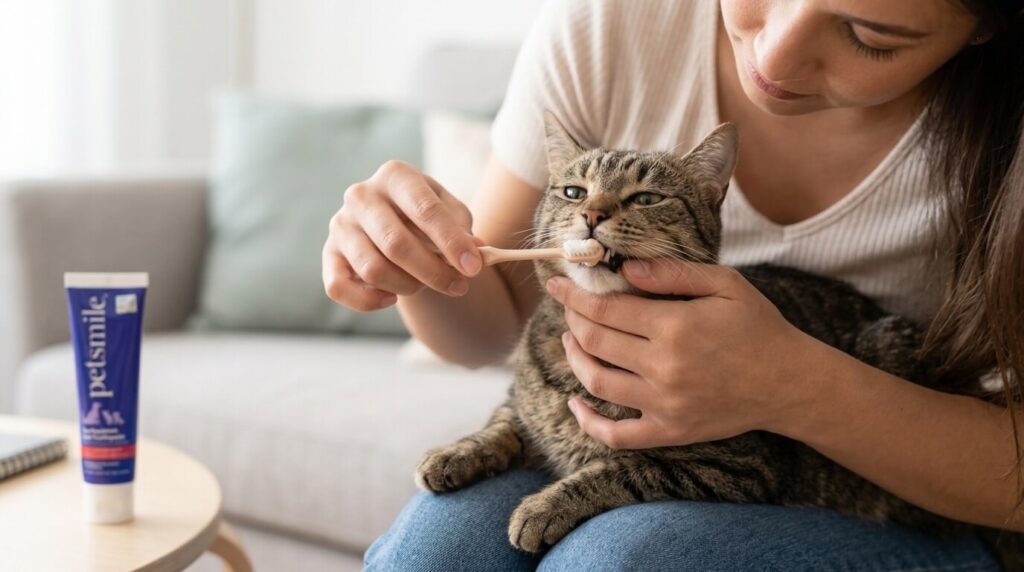
- Introduce gentle toothbrushing. Use a soft toothbrush designed for cats and toothpaste made specifically for feline use. Start slowly by letting your cat sniff the brush and taste a small amount of cat-safe toothpaste. Gradually work toward brushing the outer surfaces of the teeth.
- Never use human toothpaste. Human toothpaste is not formulated for cats and may contain ingredients that are unsafe for them to swallow. Always choose a feline dental product.
- Ask your veterinarian about dental diets and products. Some specially formulated diets, treats, and oral-care products may help control plaque or tartar. Their effectiveness varies, so ask your veterinarian which options suit your cat.
- Keep fresh water available. Make sure your cat always has access to clean drinking water. If you are considering a dental water additive, choose a product specifically intended for cats and ask your veterinarian whether it is appropriate.
- Do not try to scrape tartar off at home. Hardened deposits and disease below the gumline may require professional dental treatment. Brushing helps control plaque, but it cannot replace a veterinary cleaning when significant dental disease is already present.
When to Seek Veterinary Care
Persistent bad breath deserves veterinary attention, even if your cat seems otherwise normal. Cats often hide dental pain, and a professional examination can help identify problems that are difficult to see at home.
Arrange a veterinary appointment if you notice:
- Red, swollen, or bleeding gums
- Excessive drooling or pawing at the mouth
- Difficulty chewing, dropping food, or refusing meals
- Broken, loose, or discolored teeth
- Ongoing bad breath or a sudden change in odor
- Weight loss, reduced energy, or changes in drinking and urination
Seek urgent veterinary care if your cat stops eating, appears severely unwell, or develops sweet or fruity breath alongside vomiting, weakness, or rapid breathing. These signs may indicate a serious illness and should not be managed with home dental care alone.
A veterinarian may recommend professional cleaning under anesthesia, dental X-rays, treatment for painful teeth, or tests for an underlying condition. The right treatment depends on the cause of the odor.
Closing Thoughts for Pet Parents
Cat bad breath is common, but persistent foul odor should not be dismissed as a normal part of owning a cat. Dental disease is a frequent cause, and gentle daily oral care can help reduce plaque buildup. However, brushing and dental products cannot treat every condition.
Pay attention to changes in your cat’s breath, eating habits, and behavior. With regular veterinary checkups and a suitable dental-care routine, you can help protect your cat’s oral health and recognize potential problems earlier.
Ontaryo articles are collectively researched, written, and maintained by our editorial team to help you keep your pets healthy and happy. Read our editorial policy.