

If you have ever noticed your dog carefully tracking a beam of light as it moves across the floor, you are witnessing a common canine behavior. Dogs often seek out sunny patches in living rooms, backyards, and sleeping areas to enjoy a comfortable nap.
While lying in a warm ray of light may look like simple relaxation, this behavior can be related to warmth, comfort, and a dog’s natural preference for cozy resting places. Understanding why dogs sleep in the sun can help pet owners provide a comfortable environment while making sure their dogs stay safe.
Thermal Comfort and Relaxation
One of the main reasons dogs lie in direct sunlight is to enjoy the warmth. Dogs maintain a normal body temperature of approximately 101°F to 102.5°F (38.3°C to 39.2°C), although individual readings can vary.
A sunny spot may feel especially comfortable when the surrounding room or outdoor environment is cool.
- Enjoying warmth: Sunlight can make a resting place more comfortable, particularly during colder weather.
- Relaxation: Some dogs prefer warm, quiet places when they want to rest. Choosing a sunny spot may simply be part of their individual sleeping habits.
- Comfort for older dogs: Gentle warmth may feel soothing to some senior dogs, although sunlight should not be considered a treatment for arthritis or other joint conditions. Dogs with stiffness or persistent pain should be assessed by a veterinarian.
Every dog has different preferences. Some enjoy a warm patch of sunlight, while others prefer a cool floor or a shaded bed. Allow your dog to choose a comfortable resting place and move away from the sun whenever they want.
The Relationship Between Sunlight, Mood, and Sleep
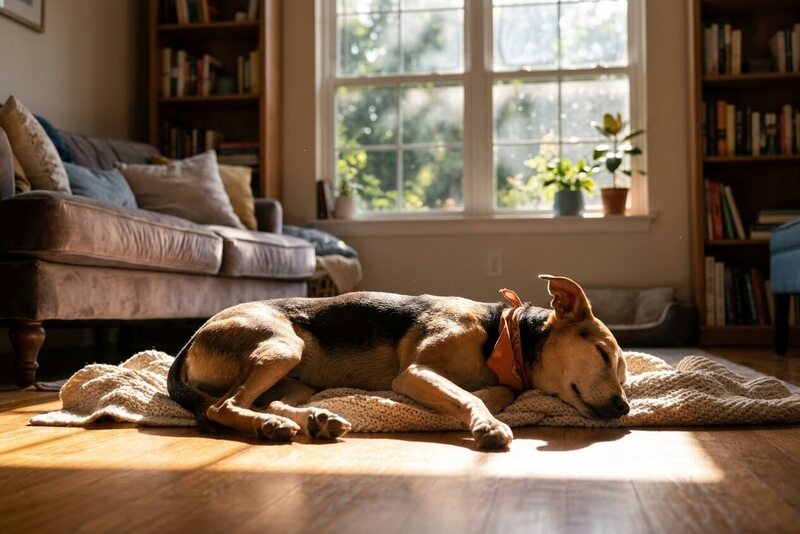
Natural daylight helps regulate daily biological rhythms in many animals, including dogs. Exposure to a regular day-and-night cycle can support a consistent routine of daytime activity and nighttime rest.
However, it is important not to overstate what sunlight does for a dog’s brain chemistry. There is not enough evidence to conclude that sleeping in a sunny spot directly increases serotonin levels, reduces anxiety, or guarantees deeper sleep in dogs.
Daylight and Daily Routines
Dogs respond to environmental cues such as daylight, household activity, feeding times, and walks. A predictable routine can help them develop regular patterns of activity and rest.
Allowing your dog to enjoy daylight as part of a balanced daily routine is reasonable, but sunbathing should not be treated as a solution for anxiety or sleep problems. If your dog has persistent restlessness, disrupted sleep, or signs of stress, speak with your veterinarian.
Do Dogs Get Vitamin D From Sunlight?
Many people assume dogs produce vitamin D through their skin in the same way humans do. However, dogs obtain most of their vitamin D from their diet rather than relying on sunlight exposure.
A nutritionally complete dog food should provide the nutrients required for your dog’s life stage. Sunbathing is not a reliable way to meet vitamin D requirements, and dogs should not be exposed to excessive sunlight for this purpose.
Do not give your dog vitamin supplements unless your veterinarian recommends them. Excessive vitamin D can be harmful, so supplements should only be used when appropriate for your dog’s individual needs.
Potential Risks of Excessive Sun Exposure
Although relaxing in a sunny spot can be enjoyable, too much heat or prolonged exposure to direct sunlight can create health risks.
1. Overheating and Heatstroke
Dogs primarily cool themselves by panting, so they can become dangerously overheated in hot conditions. The risk increases during humid weather, strenuous exercise, and prolonged exposure to direct sunlight.
Watch for heavy or persistent panting, excessive drooling, weakness, vomiting, confusion, or difficulty breathing. These symptoms can indicate a serious problem. Suspected heatstroke requires urgent veterinary attention.
For reliable veterinary guidance on recognizing and responding to heatstroke, see VCA Animal Hospitals’ guide to Heat Stroke in Dogs
If your dog frequently pants in warm weather, read our guide on why your dog may be panting so much.
2. Sunburn and Skin Damage
Dogs can develop sunburn, particularly in areas with thin fur, exposed skin, or little pigmentation. The nose, ears, belly, and other sparsely covered areas may be especially vulnerable.
Dogs with white or light-colored coats and dogs with hair loss may need additional protection. Ask your veterinarian about suitable dog-safe sunscreen if your pet is at risk.
3. Dehydration
Warm conditions can increase a dog’s need for water, particularly after exercise or prolonged outdoor activity. Make sure fresh water is always available and that your dog has access to shade.
Never leave a dog in a parked car, even if the windows are partly open. Temperatures inside a vehicle can rise rapidly and become life-threatening.
Practical Tips for Safe Sunbathing
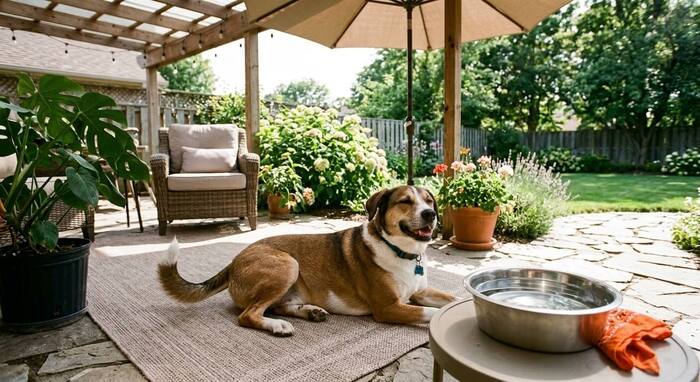
You do not need to stop your dog from enjoying the sunshine. The goal is to make sure they can rest comfortably without becoming too hot.
- Provide shade: Make sure your dog can easily move out of direct sunlight and into a cooler area.
- Keep fresh water available: Provide clean drinking water indoors and outdoors.
- Avoid intense midday heat: Plan outdoor activities for cooler parts of the day, especially during hot weather.
- Watch your dog’s behavior: If your dog starts panting heavily, seems restless, or tries to find a cooler place, move them out of the heat. You can also read our guide on why dogs pant so much and how to manage heat.
- Protect sensitive skin: Ask your veterinarian about dog-safe sunscreen if your pet has thin fur or exposed skin.
- Adjust care to your dog’s needs: Puppies, senior dogs, overweight dogs, and flat-faced breeds may be more vulnerable to heat. The PDSA guide to keeping dogs cool in summer explains how to help dogs stay comfortable and reduce the risk of overheating.
Never force your dog to remain in the sun. They should always have the option to move to shade or a cooler resting place.
In Summary
Dogs often sleep in the sun because they enjoy the warmth and comfort of a sunny resting spot. Natural daylight can also form part of a healthy daily routine, but it should not be presented as a proven treatment for anxiety, joint pain, or sleep problems.
Allow your dog to enjoy sunlight in moderation, provide fresh water and shade, and watch for signs of overheating. With a few simple precautions, you can help your dog stay comfortable while reducing the risks associated with excessive heat.
Ontaryo articles are collectively researched, written, and maintained by our editorial team to help you keep your pets healthy and happy. Read our editorial policy.