
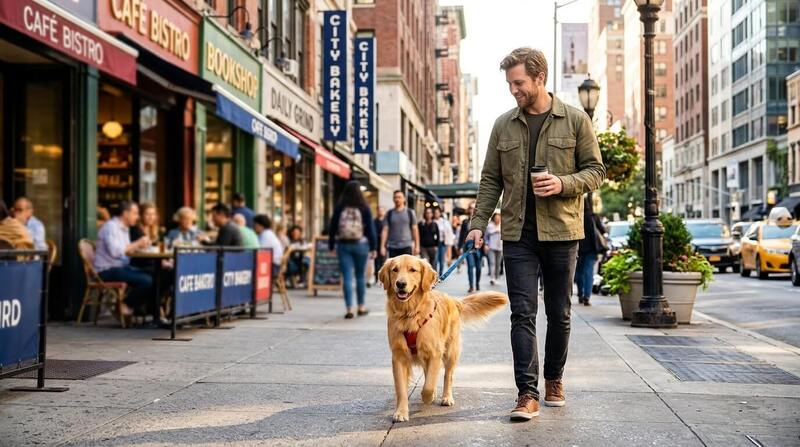
Navigating busy city sidewalks with a dog can be an exciting adventure. However, it can also cause unexpected stress. City streets are filled with traffic, narrow walkways, bicycles, unfamiliar dogs, and constant noise. Your dog must process all this sensory input while staying close to you and responding to your guidance.
Whether you have an energetic terrier or a timid rescue, mastering city walks requires patience and consistency. With the right approach, you can turn stressful outings into calmer daily routines that help your dog feel safer and more confident.
Navigating High-Stimulation Sidewalks and Triggers
City streets are packed with sudden sounds, passing vehicles, discarded food, and unexpected movement. For some dogs, this stimulation can lead to anxiety, pulling, barking, or leash reactivity. When a dog feels overwhelmed, they may struggle to respond to familiar commands.
Instead of expecting your dog to ignore everything around them, teach them to check in with you during quieter moments. Reward them when they look at you voluntarily, walk beside you, or respond to their name. Gradually practice these behaviors in busier environments as their confidence improves.
For example, if your dog notices a cyclist approaching, calmly move to a comfortable distance and reward them for remaining relaxed. Avoid forcing them to approach something that frightens them. Reward-based methods can help dogs develop more positive associations with challenging situations. The Humane Society of Missouri’s guide to reinforcement and rewards offers additional guidance on this approach.
Leash Control and Spatial Awareness in Tight Spaces
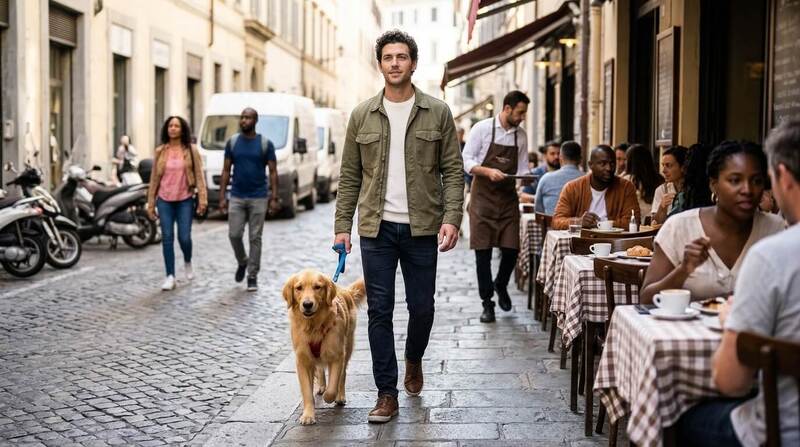
Proper leash handling is essential on narrow sidewalks, near building entrances, and around crowded crossings. A standard four-to-six-foot leash generally provides better control than a retractable leash in busy pedestrian areas. A well-fitted harness may also help you guide your dog comfortably, particularly if they tend to pull.
Keep the leash short enough to prevent your dog from rushing into traffic or approaching strangers, but avoid keeping it constantly tight. A relaxed leash gives your dog room to move naturally while allowing you to respond quickly when necessary.
Pay attention to your surroundings before reaching a difficult spot. If a delivery cart, stroller, or group of pedestrians is approaching, pause in a safe place or move aside to create room. Avoid wrapping the leash around your hand, and never allow it to stretch across a busy walkway where someone could trip over it.
If you want to strengthen your relationship and improve communication before tackling crowded streets, read our guide on how to bond with your dog. Practicing simple attention and reward exercises at home can make outdoor training easier.
Managing Sidewalk Encounters and Greeting Etiquette
Many owners assume their dog should greet every dog they pass. However, on-leash greetings are not always comfortable or appropriate. A narrow sidewalk may leave both dogs with little room to move away, potentially creating tension.
When another dog approaches, observe your pet’s body language. Stiff posture, a closed mouth, intense staring, repeated barking, or attempts to retreat may indicate discomfort. If you notice these signals, increase the distance rather than encouraging an interaction.
You can step aside, cross the street when safe, or wait behind a suitable visual barrier. Ask the other owner before allowing any greeting, and remember that either dog may prefer to keep walking.
Your own behavior matters, too. Try to remain calm and avoid suddenly jerking the leash. If your dog becomes highly distressed, prioritize distance and safety instead of insisting on obedience in that moment.
The ASPCA’s dog bite prevention guidance provides further advice on respecting a dog’s comfort level and avoiding risky interactions.
Building Mental Enrichment into Urban Walks
A successful city walk does not have to involve walking quickly for the entire time. Dogs experience their surroundings largely through scent, and sniffing gives them opportunities to explore and gather information about the environment.
Choose safe places where your dog can pause and sniff without blocking pedestrians or getting too close to traffic. You can alternate between short periods of structured walking and relaxed exploration. This balance provides mental stimulation while helping prevent the walk from becoming an exhausting series of commands.
Allow your dog to investigate suitable grass verges or quiet corners, but supervise closely around discarded food, broken glass, cigarette ends, and other potentially dangerous items. Practicing a reliable “leave it” cue can help discourage your dog from picking up something unsafe.
Remember that different dogs need different levels of activity. A young, energetic dog may benefit from a longer route with enrichment breaks, while an older dog or a nervous rescue may do better with shorter, quieter outings.
What to Do When Your Dog Becomes Overwhelmed
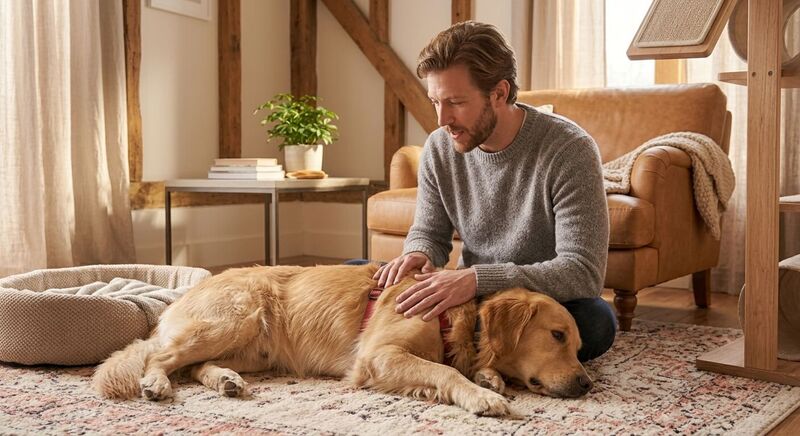
Even a well-trained dog can have a difficult day. If your pet starts panting heavily despite mild weather, repeatedly scanning the surroundings, refusing treats they usually enjoy, pulling toward home, or trying to hide, consider whether the environment has become too stressful.
Do not force your dog to remain in a crowded area to “get used to it.” Instead, move to a quieter street or a safe space where they can settle. Keep your voice calm, allow them time to recover, and shorten the walk if necessary.
If your dog regularly reacts strongly to traffic, people, or other dogs, gradually introduce these situations from a distance where they can still remain comfortable. Severe or persistent fear and reactivity may require support from a qualified, reward-based trainer or veterinary behavior professional.
Creating a Consistent City-Walking Routine
Consistency helps dogs understand what to expect. Whenever possible, choose a route that includes quieter streets, safe places to pause, and enough room to avoid close encounters. During particularly busy periods, consider walking at a less crowded time.
Before leaving home, check that your dog’s harness or collar fits securely and that identification details are current. Carry small treats, waste bags, and water when weather conditions or the length of the walk make it necessary. In hot weather, avoid overheated pavement and take extra precautions to prevent overheating.
Keep training goals realistic. One successful calm pass by another dog can be more valuable than a long walk filled with stressful encounters. Over time, reward your dog’s progress and adjust your route to suit their needs.
City walking becomes easier when you combine safe leash handling, thoughtful distance, positive reinforcement, and opportunities to explore. With patience and regular practice, your dog can learn to navigate urban surroundings with greater confidence, making daily walks safer and more enjoyable for both of you.
Ontaryo articles are collectively researched, written, and maintained by our editorial team to help you keep your pets healthy and happy. Read our editorial policy.
Comments
One response
[…] areas, practicing calm leash skills can be just as important as increasing exercise. Our guide to stress-free urban dog walking explains how to manage crowded sidewalks, encounters with other dogs, and environmental […]