
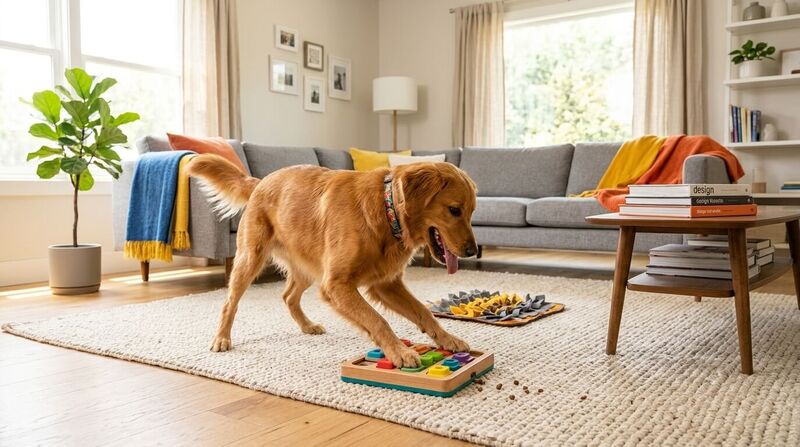
Active breeds need much more than a quick daily stroll around the block. Working dogs like Border Collies, German Shepherds, and Retrievers often enjoy activities that challenge their minds as well as their bodies. Without enough exercise, interaction, and opportunities to use their natural instincts, some dogs may develop unwanted behaviors such as excessive barking, chewing, or constant restlessness.
Fortunately, a well-planned enrichment routine can help channel that energy into positive activities. By combining physical play, scent games, problem-solving tasks, and short training sessions, you can give your dog a more balanced daily routine.
The Difference Between Physical Exercise and Mental Enrichment
Many owners assume that physical exhaustion is the ultimate goal. However, repeatedly throwing a ball for long periods may build endurance without teaching a dog how to relax or settle down afterward.
Mental enrichment offers a different kind of challenge. Activities involving scent, observation, learning, and problem-solving allow dogs to use important natural abilities. Puzzle toys, food-searching games, and reward-based training are practical ways to introduce this type of stimulation.
For a balanced routine, combine physical activity with mental challenges rather than relying on either one alone. If you need ideas for active play, our guide on how to tire out a high-energy dog explores ways to provide suitable exercise and stimulation.
Remember that enrichment needs vary between individual dogs. Age, health, breed tendencies, temperament, and previous experience all influence which activities are appropriate.
Turn Fetch Into a Focus and Impulse-Control Game
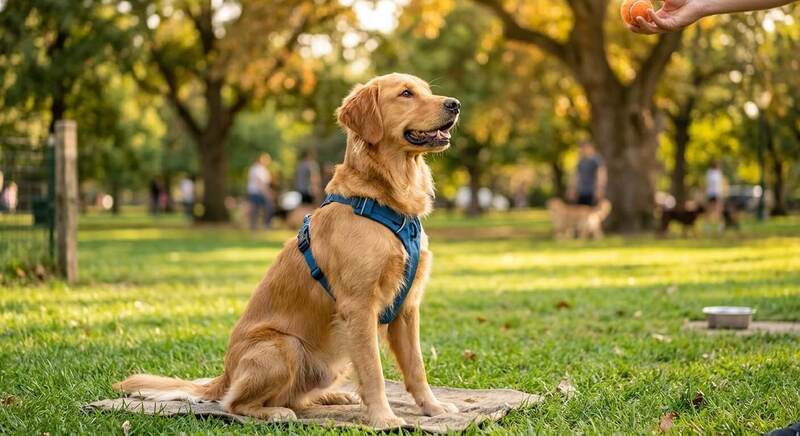
Fetch can be an enjoyable way to exercise dogs that love chasing and retrieving. You can make the game more engaging by introducing simple training cues instead of throwing the ball repeatedly without breaks.
Ask your dog to sit or wait briefly before throwing the toy. Release them with a consistent cue, then reward them when they return. You can also practice “drop it” or ask for eye contact before starting the next round.
Keep sessions manageable and give your dog opportunities to pause. Repeated high-speed chasing, sudden stops, and sharp turns may place extra strain on joints, especially in growing puppies or dogs with existing health problems. Use a suitable surface and adjust the intensity to your dog’s fitness and physical condition.
The aim is not to make every game more demanding. Instead, use play to encourage cooperation, build communication, and provide enjoyable movement without pushing your dog beyond their limits.
Introduce Scent Work and Natural Foraging
Sniffing is one of the simplest ways to provide mental enrichment. Dogs use their noses to investigate their surroundings, and searching for food or familiar objects gives them a clear task to complete.
Start with an easy game at home. Ask your dog to wait while you hide a few pieces of their regular kibble in visible, accessible places. Give a release cue and encourage them to search. As they understand the game, hide the food in slightly more challenging locations.
You can also scatter a portion of your dog’s meal over a clean patch of grass or use a snuffle mat designed for dogs. Always supervise homemade activities and avoid places where your dog might swallow rubbish, harmful plants, or other dangerous objects.
For more ideas, the American Kennel Club’s guide to indoor scent games for dogs explains how scent-based activities can work even when outdoor exercise is limited.
Use Puzzle Toys and Food-Dispensing Activities
Food puzzles encourage dogs to work out how to reach a reward. Depending on the toy, your dog might need to move a sliding panel, roll a dispenser, or search through compartments to find food.
Begin with an easy puzzle so your dog can succeed quickly. If the activity is too difficult, some dogs will lose interest or become frustrated. Once your pet understands how it works, you can gradually introduce a more challenging design.
You do not need to buy a large collection of expensive toys. A snuffle mat, a suitable food-dispensing toy, or a supervised cardboard-box search game may provide useful variety. Choose materials that suit your dog’s chewing habits, and remove any item that breaks apart or could be swallowed.
Veterinary guidance from VCA Animal Hospitals on enrichment and foraging toys explains how to select suitable activities, adjust difficulty, and supervise pets during play.
To avoid overfeeding, use part of your dog’s normal daily food allowance for these games and account for any additional treats.
Teach New Skills Through Short Training Sessions
Training is another effective form of enrichment because it encourages dogs to pay attention, remember cues, and solve small problems. You do not need to teach complicated tricks to make a session useful.
Start with simple skills such as touching your hand with their nose, going to a mat, finding a named toy, or waiting calmly before receiving a reward. Practice for a few minutes at a time and finish while your dog is still engaged.
Reward-based training helps make learning a positive experience. If your dog struggles with a task, make it easier rather than repeating the same command or becoming frustrated. Gradually increase the challenge as your dog improves.
These sessions can also support everyday manners, including coming when called, settling at home, and remaining focused around distractions.
Combine Enrichment With Calm Outdoor Walks
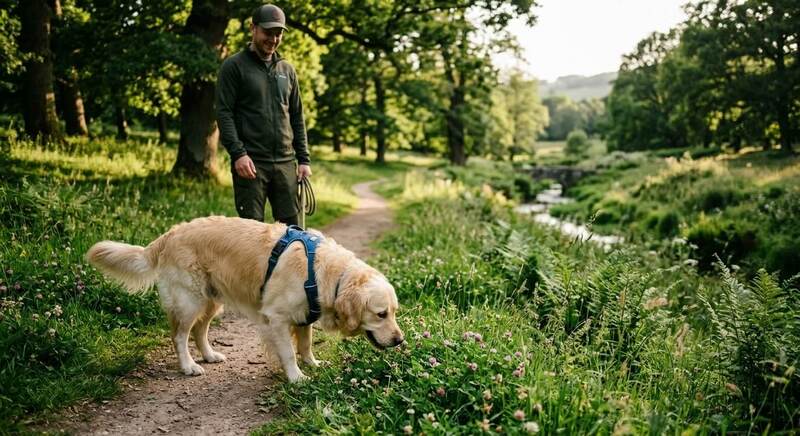
Active dogs still need appropriate physical exercise and opportunities to explore outside. However, not every walk needs to be fast-paced or focused on distance.
Allow your dog to sniff in safe locations, explore different routes, and take breaks when needed. You can alternate between periods of walking and relaxed investigation to create a more varied outing.
For dogs that become excited or distracted in busy areas, practicing calm leash skills can be just as important as increasing exercise. Our guide to stress-free urban dog walking explains how to manage crowded sidewalks, encounters with other dogs, and environmental distractions.
Pay attention to your dog’s behavior after activities. If your pet becomes increasingly frantic, struggles to settle, or seems physically uncomfortable, adjust the duration and intensity. More activity is not always the answer; predictable routines and sufficient rest matter, too.
Build a Daily Routine That Works for Your Dog
A useful enrichment routine does not need to be complicated. You might begin the day with a walk, introduce a short training session later, and offer a food puzzle or scent game at home. Another day could include supervised fetch, a relaxed sniffing walk, and quiet time with a suitable chew toy.
Rotate activities to keep them interesting, but introduce new games gradually. Always supervise unfamiliar toys and homemade puzzles, especially if your dog tends to chew or swallow objects.
If destructive behavior or restlessness persists despite suitable exercise and enrichment, consider other causes such as separation-related distress, anxiety, discomfort, or unmet training needs. A veterinarian or qualified reward-based trainer can help you determine what support is appropriate.
High-energy dogs benefit from a thoughtful balance of movement, mental challenges, social interaction, and rest. By offering varied activities that suit your dog’s individual needs, you can encourage healthy engagement and make everyday life more rewarding for both of you.
Ontaryo articles are collectively researched, written, and maintained by our editorial team to help you keep your pets healthy and happy. Read our editorial policy.
Comments
One response
[…] If your dog has lots of energy, you may find additional ideas in our guide to mental enrichment activities for high-energy dogs. […]