
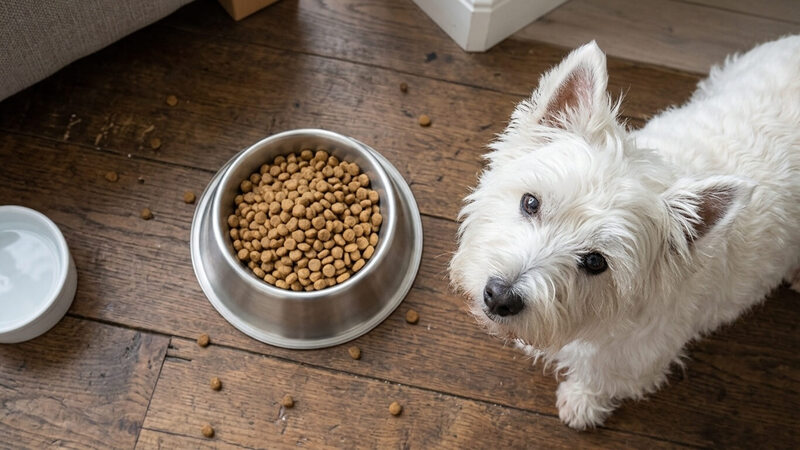
When a dog that normally devours their meals in seconds suddenly backs away from the food bowl, it can quickly make any pet owner worry. A sudden refusal to eat dry kibble can happen for several reasons, including dental discomfort, digestive problems, changes in food quality, stress, or feeding habits.
Although some dogs can be selective eaters, a sudden change in appetite should not automatically be dismissed as picky behavior. Understanding what might be causing the problem can help you decide what to try at home and when to seek veterinary advice.
Why Dogs Refuse Dry Kibble
Dry kibble has a firm texture that requires chewing, so some dogs may avoid it when eating becomes uncomfortable. However, refusing dry food can also be related to nausea, illness, stress, or a change in the food itself.
Pay attention to whether your dog refuses all food or only dry kibble. A dog that avoids hard food but still accepts soft food may have mouth discomfort, although this behavior alone cannot confirm a dental problem.
Common Reasons Your Dog Refuses Kibble
Dental Problems and Mouth Pain
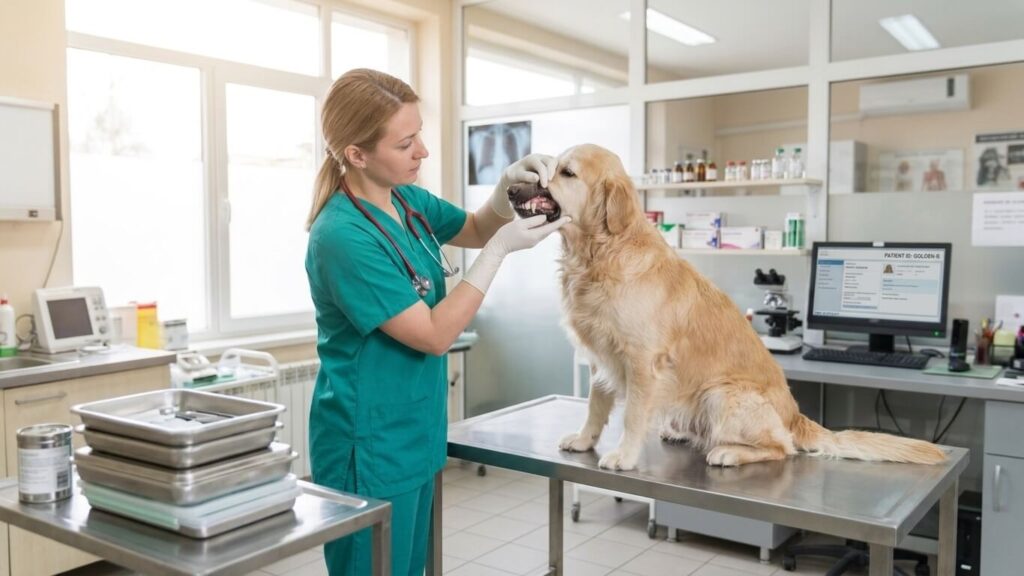
Dental discomfort is one possible reason a dog suddenly stops eating dry kibble. Broken teeth, inflamed gums, dental infections, and other oral health problems can make chewing uncomfortable.
Your dog may approach the bowl eagerly, pick up a piece of kibble, and then drop it or walk away. Other possible signs include drooling, chewing on one side of the mouth, pawing at the face, or having unusually unpleasant breath.
If you notice these behaviors, arrange a veterinary examination. Softening food may make chewing easier temporarily, but it will not treat the underlying dental problem.
Regular dental care is important because dental disease can cause discomfort that affects a dog’s willingness to chew. The American Veterinary Medical Association’s pet dental care guidance explains why maintaining your pet’s oral health matters.
Spoiled or Stale Food
Dry dog food can lose freshness when exposed to air, heat, or moisture. Over time, the fats in kibble may become rancid, affecting its smell and taste.
Check the expiration date and inspect the food for unusual odors, discoloration, moisture, or signs of contamination. Store kibble in a cool, dry place and keep the original packaging sealed according to the manufacturer’s recommendations.
If you suspect the food has spoiled, do not feed it to your dog. Replace it with fresh food that is appropriate for their age and nutritional needs.
Digestive Upset and Nausea
Digestive discomfort can reduce a dog’s appetite. Nausea, stomach irritation, dietary changes, or eating something unsuitable may make your dog reluctant to eat their usual meal.
Watch for other symptoms, such as vomiting, diarrhea, unusual tiredness, restlessness, or changes in drinking habits. If your dog appears unwell or the appetite change persists, contact your veterinarian rather than assuming the problem is simply picky eating.
Environmental Stress and Routine Changes
Dogs can be sensitive to changes in their surroundings. Moving to a new home, introducing another pet, having visitors, experiencing loud noises, or changing the usual feeding schedule may affect a dog’s willingness to eat.
Try feeding your dog in a quiet, familiar location where they can eat without interruptions. Keep mealtimes consistent and provide a comfortable environment.
Building trust and maintaining a positive relationship can also help dogs feel more secure. You may find additional practical ideas in our guide on how to bond with your dog.
If your dog’s appetite does not improve or other symptoms appear, do not assume stress is the only cause.
Picky Eating and Too Many Treats
Some dogs become less interested in their regular meals when they receive frequent treats, table scraps, or extra food throughout the day. They may learn to wait for something different if their usual kibble is regularly replaced with a more appealing option.
If your dog seems unusually hungry between meals or constantly asks for extra food, it may help to understand the difference between genuine hunger and learned food-seeking behavior. Read our guide on how to tell real hunger from behavioral cravings in dogs.
Review how many treats and extras your dog receives and keep them within a suitable daily amount. Offer a balanced, complete diet appropriate for your dog’s needs, and avoid repeatedly changing foods without a clear reason.
However, a sudden refusal of a previously accepted food should not automatically be blamed on picky eating. First consider whether a health issue or another change could be responsible.
How to Help Your Dog Eat Dry Kibble Again
Before making major changes to your dog’s diet, consider these practical steps.
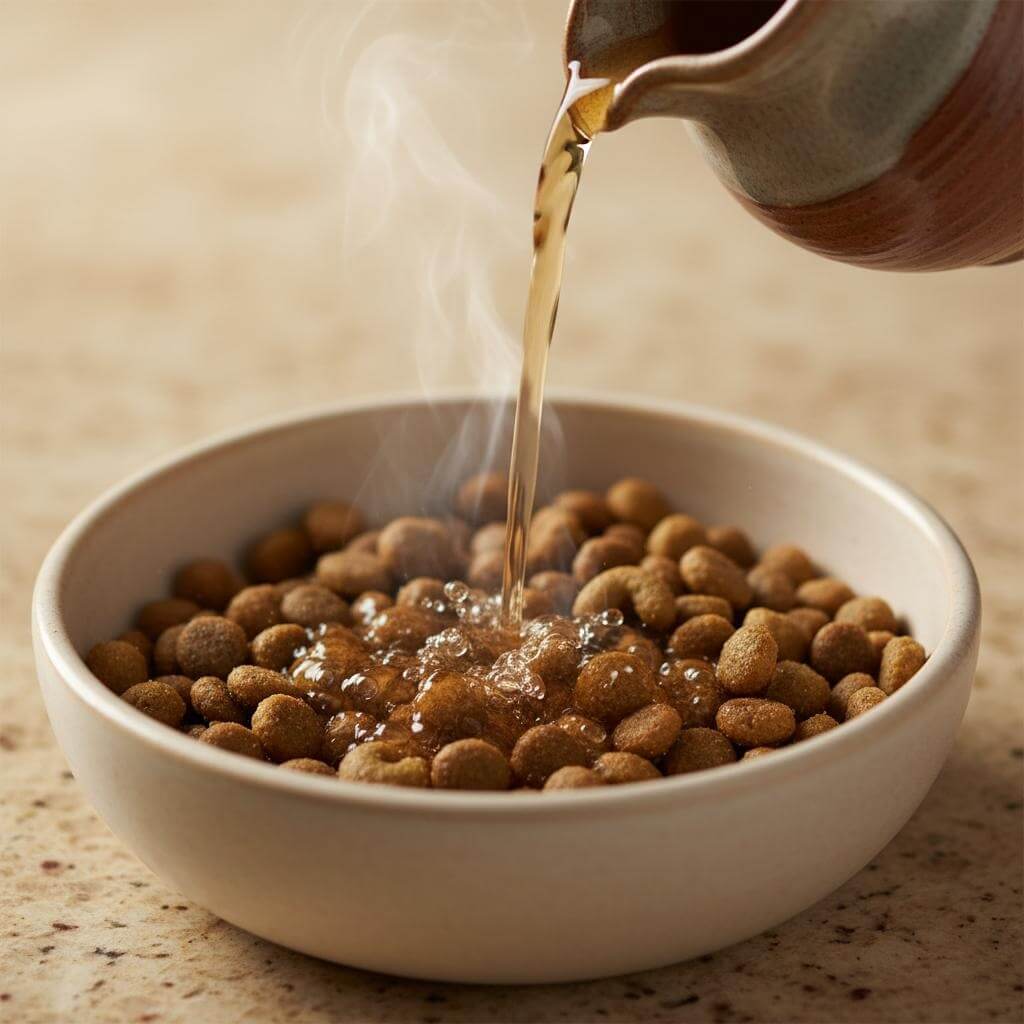
Add warm water to soften the kibble. A little warm water can soften the texture and release the food’s aroma, which may make the meal more appealing. Allow the kibble to soften before serving it. This may help with chewing comfort temporarily, but it does not treat dental disease or other medical conditions. If you use broth, choose a dog-safe option without onion, garlic, or excessive salt.
Check the food’s freshness. Inspect the packaging, expiration date, smell, and appearance. Store the food properly and follow the manufacturer’s storage instructions.
Create a calm feeding routine. Offer meals in a quiet place and try to serve them at consistent times. Avoid pressuring or forcing your dog to eat.
Review treats and food extras. Too many treats can reduce interest in regular meals. Keep treats moderate and avoid giving table scraps that may upset your dog’s stomach or unbalance their diet.
Be cautious when changing foods. If a different food is needed, choose one suitable for your dog’s age and health. When appropriate, transition gradually according to veterinary advice or the food manufacturer’s instructions. If your dog is refusing food because of illness or pain, changing brands alone will not solve the underlying problem.
When Should You Call the Vet?
A skipped meal does not always mean something serious is wrong, but a sudden change in eating habits deserves attention. According to NC State Veterinary Hospital’s guidance on picky eaters, medical issues should be considered when a pet’s eating behavior changes.
Contact your veterinarian if your dog continues refusing food, repeatedly avoids hard food, or shows signs of mouth pain. Seek prompt veterinary advice if the appetite change occurs alongside vomiting, diarrhea, unusual tiredness, changes in drinking, or other concerning symptoms.
Do not wait if your dog appears seriously ill, has severe weakness, cannot keep water down, or may have swallowed something toxic or dangerous. Puppies, senior dogs, and dogs with existing medical conditions may need earlier assessment when they stop eating.
Never force food into your dog’s mouth or give human medication unless your veterinarian specifically instructs you to do so.
What Every Dog Owner Should Remember
- Look for the cause: Dental discomfort, digestive problems, stale food, stress, and feeding habits can all affect appetite.
- Soften food carefully: Warm water may make kibble easier to chew, but it does not treat dental pain or illness.
- Watch for other symptoms: Vomiting, diarrhea, weakness, or signs of mouth pain warrant veterinary advice.
- Keep feeding habits consistent: Store food correctly, limit excessive treats, and provide a calm place to eat.
- Take sudden changes seriously: If your dog continues refusing food or seems unwell, contact your veterinarian instead of assuming they are simply being picky.
Helping your dog return to a healthy eating routine starts with understanding why they have stopped eating. Small adjustments may help when the cause is related to food freshness or feeding habits, but persistent refusal or signs of illness should always be taken seriously. With careful observation and appropriate veterinary guidance, you can take the right steps to support your dog’s health and well-being.
Ontaryo articles are collectively researched, written, and maintained by our editorial team to help you keep your pets healthy and happy. Read our editorial policy.
Comments
One response
[…] for dental care. If you are having trouble choosing or changing your dog’s food, our guide on what to do when your dog suddenly refuses their dry kibble offers practical feeding […]