
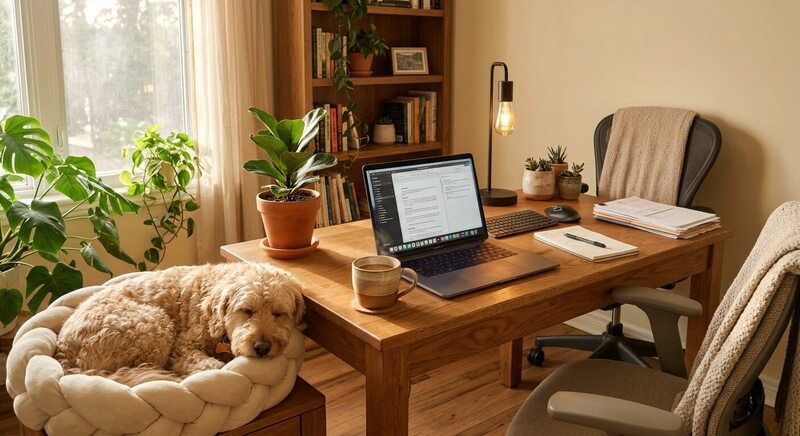
Working from home with a dog can make your day more enjoyable, but it can also bring a few challenges. Your dog may bark during meetings, ask for attention while you are working, or struggle to settle when you need to concentrate. Even a well-behaved dog can find it difficult to understand why you are home but not available to play.
The good news is that a consistent routine, suitable activities, and a comfortable resting area can help both of you adjust. You do not need to keep your dog busy every minute. Instead, focus on meeting their needs while teaching them when it is time to relax independently.
The Common Challenges of Remote Work With Pets
Dogs thrive on companionship, movement, and predictable routines. When your work schedule changes, they may respond by whining, nudging your hand, bringing toys to your desk, or barking for attention.
Some dogs become restless because they need exercise or mental stimulation. Others may have learned that interrupting their owner leads to play or affection. Dogs that struggle when separated from their people may also show signs of distress when the owner becomes less available.
Understanding what is behind the behavior helps you choose the right solution rather than simply trying to stop the interruptions.
Start the Day With an Appropriate Exercise Routine

A little activity before work can help your dog settle more comfortably during the morning. Depending on your dog’s age, health, breed, and energy level, this might include a walk, a game of fetch, a short training session, or time to explore and sniff outdoors.
You do not necessarily need a long or intense workout. The goal is to give your dog an appropriate opportunity to move, investigate their surroundings, and take care of their basic needs before you begin working.
Afterward, allow time for water, breakfast if it fits your feeding routine, and a calm transition to your workspace. Avoid assuming that every dog needs to be exhausted to relax. Some dogs become more excited after intense exercise, while others need only a moderate walk and a quiet place to rest.
If your dog has lots of energy, you may find additional ideas in our guide to mental enrichment activities for high-energy dogs.
Use Interactive Toys and Mental Enrichment
When you need to concentrate on a meeting or finish an important task, a suitable enrichment activity can give your dog something constructive to do.
Consider offering:
- Food puzzles: Use part of your dog’s regular meal in a suitable puzzle feeder.
- Sniffing activities: Hide a few pieces of kibble in an appropriate snuffle mat or around a safe area.
- Lick mats or stuffed toys: These can provide a calming activity when used safely and introduced gradually.
- Short training sessions: Practice simple cues such as “settle,” “stay,” or going to a designated mat.
Choose activities based on your dog’s chewing habits and supervise any new toy until you know it is safe. If you use peanut butter in a food toy, make sure it is free of xylitol, which is toxic to dogs.
Rotate activities instead of offering every toy at once. This can help keep familiar items interesting and make it easier to match an activity to your work schedule.
Remember that enrichment supports your dog’s daily needs, but it does not replace walks, social interaction, or attention from you.
Create a Comfortable Workspace and Clear Boundaries

A designated resting spot can help your dog understand where to settle while you work. This might be a dog bed, a comfortable mat, or a quiet corner near your desk.
Make the space inviting with familiar bedding and a safe toy. If your dog likes being close to you, start with the bed nearby rather than expecting them to rest alone in another room immediately.
Reward calm behavior when you notice it. For example, if your dog lies quietly while you answer emails, offer gentle praise or a small treat without turning the moment into an exciting play session.
It is also helpful to build short breaks into your schedule. Stand up, offer a bathroom break or brief walk when needed, and give your dog attention at appropriate times. Predictable breaks can make your workday easier to manage while helping your dog understand what to expect.
If your dog is used to receiving attention whenever they approach you, teach an alternative behavior gradually. Asking them to settle on their mat and rewarding that choice is more useful than repeatedly telling them to go away.
Help Your Dog Feel Comfortable With Independent Time
Some dogs find it difficult when their owner is physically present but unavailable. Others become distressed when left alone or separated from their person. These situations are not always the same, so pay attention to your dog’s behavior.
Signs of possible separation-related distress can include persistent barking or whining, pacing, destructive behavior, attempts to escape, or an inability to settle when you leave. These signs can have other causes, too, so avoid diagnosing the problem based on one behavior alone.
You can encourage independence by making brief periods of quiet activity part of your normal routine. For example, give your dog a safe food toy while you work in another room for a short time, provided your dog remains relaxed. Increase the duration gradually only when your dog is comfortable.
Do not force longer separations if your dog shows clear signs of distress. For more information about recognizing the signs and understanding treatment options, read the ASPCA’s guide to separation anxiety in dogs.
For additional ideas about helping a worried young dog feel secure, see our guide on gentle ways to calm an anxious puppy. Some approaches may also be useful for adult dogs, but persistent or severe anxiety deserves individualized guidance.
Know When to Seek Professional Help
Occasional interruptions are common, especially when a dog is adjusting to a new routine. However, ongoing distress, sudden behavioral changes, or an inability to settle may require more attention.
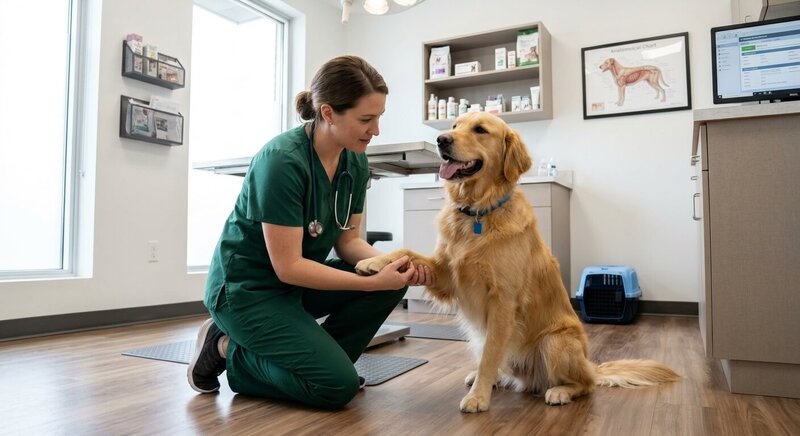
Speak with your veterinarian if your dog develops new or worsening behavior, appears unusually restless, or shows signs of distress. Pain and other health problems can sometimes affect behavior, so it is important not to assume every problem is caused by boredom or a need for training.
If separation-related distress is suspected, your veterinarian can help determine the next steps and may recommend a qualified behavior professional. The ASPCA’s practical tips for separation anxiety also explain approaches that may help, although the right plan depends on the individual dog.
Avoid punishment for barking, chewing, or accidents that happen when your dog is distressed. Punishment can increase fear and will not address the underlying cause.
A Simple Work-From-Home Routine for Dog Owners
| Part of the day | Practical activity | Purpose |
|---|---|---|
| Before work | Walk, sniffing time, or suitable play | Provides movement and an opportunity to explore |
| Start of work | Settle in a comfortable bed near your workspace | Establishes a predictable resting area |
| During a busy task | Offer a safe puzzle feeder or enrichment toy | Gives your dog an appropriate activity |
| Between meetings | Take a short break for attention, movement, or a bathroom trip | Helps meet your dog’s needs throughout the day |
| During quiet periods | Reward calm resting and relaxed independent activity | Encourages settling without constant interaction |
| After work | Spend time walking, playing, or training together | Provides dedicated attention outside work hours |
Adjust this routine to suit your dog’s age, health, energy level, and individual needs. Puppies, senior dogs, and dogs with medical or behavioral concerns may need a different schedule.
Making Remote Work Easier for You and Your Dog
Working from home with a dog is easier when you build a routine that balances activity, enrichment, rest, and attention. A morning walk, a comfortable resting space, and a suitable interactive toy can reduce some interruptions and make the workday more predictable.
Be patient while your dog learns the new routine. Reward relaxed behavior, take regular breaks, and introduce independent activities gradually. If your dog appears genuinely distressed rather than simply bored, seek professional advice instead of expecting them to adjust on their own.
With realistic expectations and a routine that fits both your work and your dog’s needs, you can create a calmer home environment where you have more time to focus and your dog still feels safe, comfortable, and included.
Ontaryo articles are collectively researched, written, and maintained by our editorial team to help you keep your pets healthy and happy. Read our editorial policy.
Comments
One response
[…] If you observe persistent or sudden changes in your pet’s energy levels, behavior, or appetite, consult a licensed veterinarian promptly to rule out any underlying medical conditions. Maintaining a structured daily schedule can also help stabilize your dog’s rest patterns—learn more about balancing your daily routine in our guide on working from home with your dog. […]