
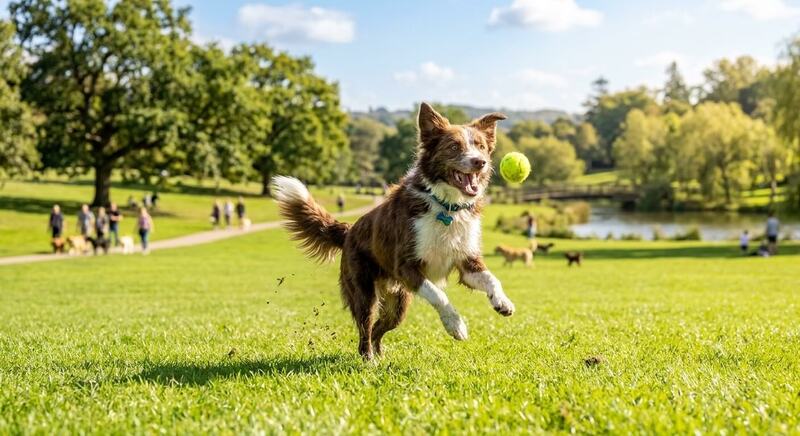
If your dog sprints across the yard like a mid-air projectile, you already know that a basic 15-minute neighborhood stroll may not be enough. High-energy breeds, working dogs, and young terrier mixes often benefit from activities that challenge their speed, coordination, curiosity, and ability to focus.
When a dog’s physical and mental needs are not adequately met, excess energy may show up as restless barking, destructive chewing, attention-seeking behavior, or chaotic indoor zoomies. However, the solution is not always to run your dog for longer and longer periods.
Tiring out an athletic dog requires a balanced routine that combines appropriate physical exercise, mental stimulation, impulse control, and enough time to rest. Here is how to create a more satisfying daily routine for your energetic companion.
The Physical vs. Mental Energy Trap
Many owners assume that doubling their dog’s running time will automatically produce a calmer pet. However, repeatedly increasing intense exercise can build stamina without teaching a dog how to settle down afterward.
Physical activity is important, but dogs also need opportunities to sniff, explore, solve simple problems, and practice calm behavior. A balanced routine gives your dog different ways to use its energy instead of relying on high-speed exercise alone.
Try incorporating these activities into your dog’s schedule:
- Interval Fetch with Impulse Control: Instead of throwing a ball continuously, ask your dog for a simple cue, such as “sit,” before throwing it. Release your dog with a consistent word, and reward calm waiting. Keep sessions short and avoid repetitive, high-impact turns, particularly for young dogs or dogs with joint concerns.
- Scent Work in the Yard: Hide a few pieces of your dog’s regular kibble or favorite treats in safe, easy-to-find locations. Let your dog search using its nose, gradually adjusting the difficulty as it gains confidence. Sniffing activities provide mental enrichment, although the amount of effort and their effects vary between individual dogs.
- Flirt Pole Sessions: A flirt pole uses a lure attached to a long pole to encourage chasing and controlled movement. Start slowly, keep sessions brief, and avoid sharp pivots or high jumps. This activity is not appropriate for every dog, especially those with existing orthopedic problems, so adapt it to your dog’s age and physical condition.
- Short Training Games: Practice familiar cues such as “come,” “stay,” “leave it,” and “go to your bed.” Reward successful responses and finish before your dog becomes frustrated or overly excited.
For more ideas about the relationship between exercise, enrichment, and zoomies, read this veterinary guide to why dogs get zoomies.
Signs Your Dog Needs Mental Stimulation, Not Just More Runs
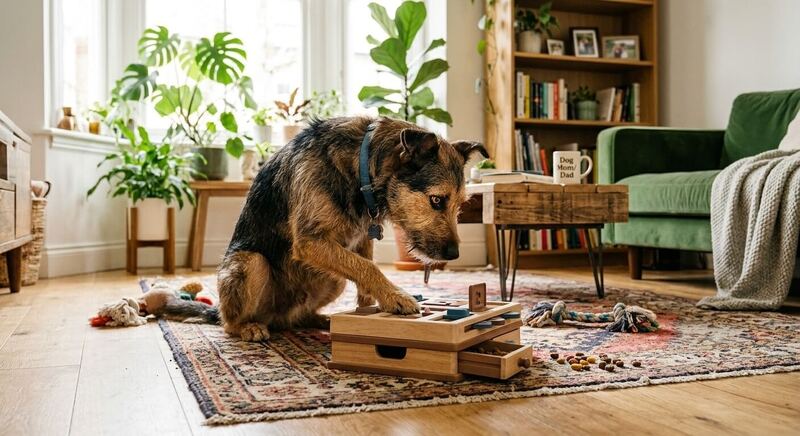
Before increasing your daily mileage, consider whether your dog might benefit from more variety, training, or opportunities to explore. These behaviors can have several causes, so they should not automatically be attributed to boredom.
- Pacing and Difficulty Settling: Your dog continues moving around the house or following you after exercise. It may need help learning to relax, a different activity, or a health assessment if the behavior is new.
- Demand Barking: Your dog barks at you, stares at you, or repeatedly brings toys to encourage interaction. Reward appropriate ways of asking for attention and provide predictable opportunities for play and rest.
- Destructive Chewing: Your dog chews furniture, shoes, or other household items. Offer suitable chew toys, supervise access to tempting objects, and consider whether stress, teething, or separation-related distress could be contributing.
- Difficulty Focusing: Your dog struggles to respond to familiar cues when excited. Practice in a quieter environment first and gradually introduce distractions.
- Frequent Zoomies: Sudden bursts of running can be normal, particularly in puppies and young dogs. If they occur frequently alongside an inability to settle, consider whether your routine needs more suitable exercise, enrichment, or calm-down time.
The goal is not to eliminate every burst of excitement. It is to help your dog enjoy activity while also developing the ability to relax in the home.
DIY Backyard Agility and Energy-Burning Routine
You do not need expensive equipment to create an engaging activity area. A few cones, sturdy cardboard boxes, or low obstacles can provide opportunities for exploration and basic coordination.
Keep the setup simple and safe. Use stable equipment, choose a non-slip surface, leave enough room between obstacles, and avoid high jumps or sharp turns. Puppies and dogs with joint problems may be better suited to gentle walking, sniffing games, and low-impact training than demanding agility exercises.
Here is an example of a short routine you can adapt to your dog’s needs:
- Warm-Up (3–5 minutes): Begin with an easy walk, relaxed sniffing, or gentle movement. Allow your dog time to adjust before increasing activity.
- Active Play (5–10 minutes): Choose a suitable game, such as controlled fetch, a gentle tug session, or walking around low obstacles. Take breaks and stop if your dog shows signs of discomfort or excessive fatigue.
- Brain Work (5–8 minutes): Offer a simple puzzle toy, practice a few familiar commands, or hide treats for your dog to find.
- Cool-Down (5 minutes): Finish with calm walking, sniffing, and an opportunity to settle in a comfortable place.
These times are only a flexible example, not a requirement for every dog. Adjust the routine according to your dog’s age, breed, fitness, health, weather conditions, and response to activity. Some dogs need shorter sessions spread throughout the day rather than one concentrated workout.
When High Energy May Signal Physical Discomfort
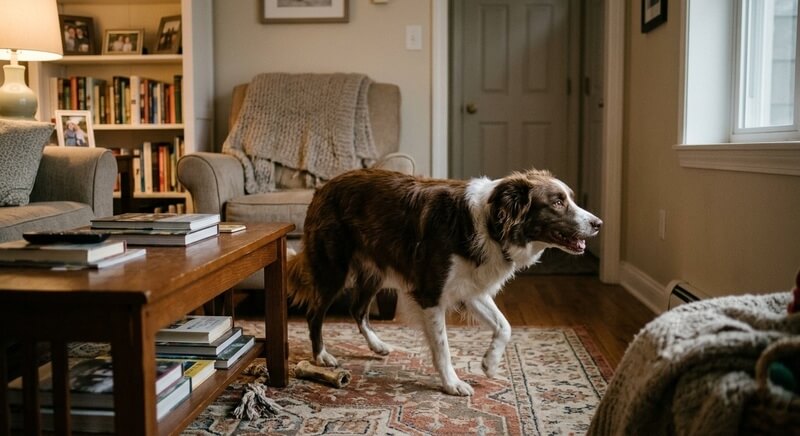
A sudden change in activity level, unusual restlessness, irritability, or clumsiness should not automatically be treated as excess energy. Pain, anxiety, environmental stress, and other medical problems can affect a dog’s behavior.
Watch for warning signs such as limping, stiffness after exercise, reluctance to jump, repeated licking of a joint, or difficulty getting comfortable. Stop strenuous activity if these signs appear and contact your veterinarian for advice.
Heat is another important consideration. Dogs can overheat during intense play, especially in warm or humid conditions. Provide fresh water, avoid strenuous exercise during the hottest part of the day, and take breaks in a cool area. Heavy or unusual panting, excessive drooling, weakness, vomiting, or collapse can indicate a serious heat-related emergency and require urgent veterinary attention. Read our guide on why dogs pant and how to manage heat-related risks.
Make Calm Behavior Part of the Routine
High-energy dogs need more than opportunities to run. They also benefit from predictable routines, positive interaction, and practice settling down between activities.
Reward your dog when it lies calmly on its bed, relaxes after play, or chooses an appropriate toy. Provide a comfortable resting area away from constant activity, and avoid turning every bark or nudge into an immediate invitation to play.
If you are working on communication, engagement, and better focus with your dog, our guide on how to bond with your dog offers additional ideas for building a stronger relationship.
A high-energy dog is not automatically a behavioral problem. With suitable exercise, engaging mental activities, consistent training, and adequate rest, you can help channel that energy into healthier, more manageable habits. The best routine is one that meets your dog’s individual needs while keeping activity safe, enjoyable, and sustainable.
Ontaryo articles are collectively researched, written, and maintained by our editorial team to help you keep your pets healthy and happy. Read our editorial policy.
Comments
4 responses
[…] When spending time in the yard or garden, ensure your dogs always have access to clean, fresh water and deep shade provided by trees, awnings, or covered patios. Adding ice cubes to outdoor water bowls helps maintain a refreshed temperature throughout the day. For more tips on outdoor exercise routines, visit our guide on Daily Dog Exercise Cues and Safety. […]
[…] challenges rather than relying on either one alone. If you need ideas for active play, our guide on how to tire out a high-energy dog explores ways to provide suitable exercise and […]
[…] If you have an energetic dog that needs more engagement throughout the day, explore our guide to high-energy dog exercise tips for practical […]
[…] your dog has plenty of energy and needs more structured activities, our guide to high-energy dog exercise tips offers additional ideas for combining movement and mental […]