
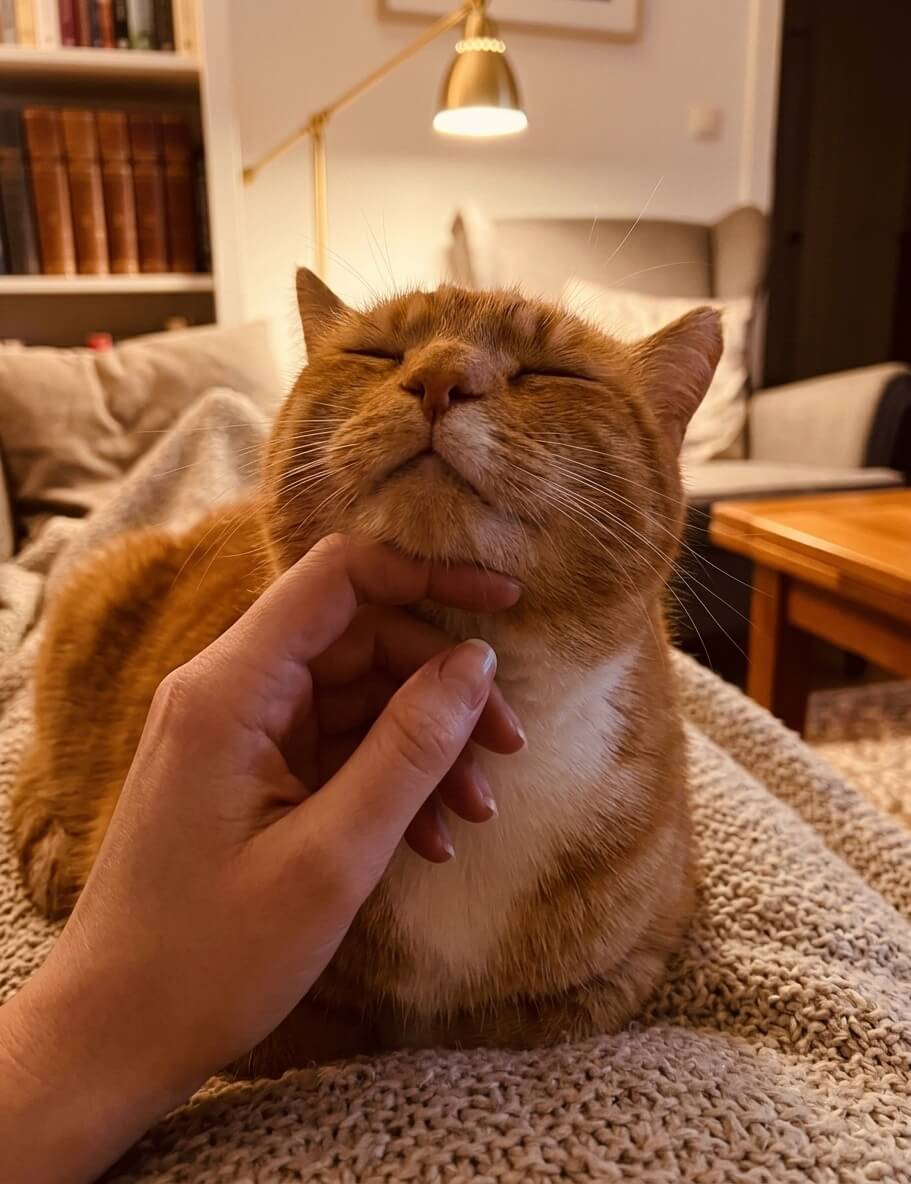
If you have ever spent a quiet afternoon with a cat, you may have noticed that finding their favorite petting spot feels like unlocking a secret code. Many cats enjoy a gentle stroke along their cheeks or beneath their jaw. When you find the right spot, your cat may stretch their neck forward, lean into your fingertips, or close their eyes contentedly.
This reaction is not a coincidence. Although every cat has individual preferences, many enjoy gentle contact around the chin, cheeks, and head. Understanding why these areas can feel appealing helps you strengthen your bond with your companion while recognizing when your cat needs a break.
The Role of Feline Scent Glands
One reason cats may enjoy chin scratches is the importance of scent in feline communication. Cats have specialized scent-producing glands in several areas of their bodies, including their cheeks and beneath their chin. These glands contribute to the chemical signals cats leave behind when they rub their faces against familiar people, animals, and objects.
When a cat presses its head against your hand or rubs its cheeks along furniture, it is engaging in a behavior commonly called bunting. This allows the cat to deposit its scent and interact with its surroundings in a familiar way.
Gentle chin scratching may overlap with this natural behavior because the area beneath the jaw contains scent-producing structures. However, the exact reason an individual cat enjoys being touched there can vary. Some may appreciate the sensation, while others prefer cheek rubs or gentle strokes across the forehead.
The Merck Veterinary Manual’s guide to the social behavior of cats explains how scent marking and rubbing help cats communicate and interact with their environment.
Why Many Cats Prefer Their Chin and Cheeks
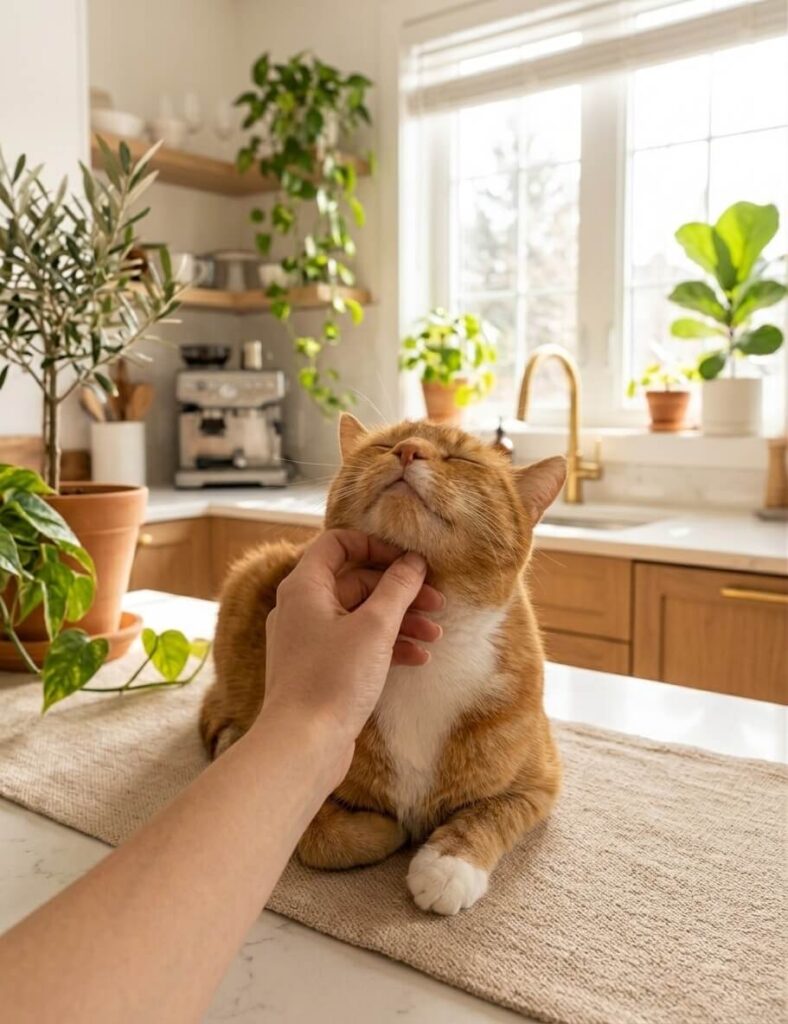
Cats are careful groomers, but grooming does not explain every preference they have for human touch. The chin and cheeks are also areas where many cats naturally engage in friendly contact with familiar cats and people.
Research-based feline care guidelines indicate that many cats respond positively to gentle petting around the head, cheeks, and chin. By comparison, some cats are less comfortable being touched along their belly, legs, or other sensitive areas.
The key is to pay attention to your own cat rather than assuming that every feline enjoys the same type of affection. A cat that pushes its chin toward your fingers may be inviting more contact, while another may prefer simply sitting beside you.
Allowing your cat to choose the type and amount of touch helps make interactions more comfortable. You can start with a brief, gentle scratch beneath the chin and observe how your cat responds before continuing.
Does Enjoying Chin Scratches Mean Your Cat Trusts You?
A cat that approaches you voluntarily and leans into gentle touch may feel comfortable in your presence. Positive interactions can help build familiarity and strengthen the relationship between a cat and its caregiver.
However, exposing the chin or throat does not automatically mean a cat feels completely trusting or vulnerable in a specific way. Cats communicate through a combination of posture, facial expressions, movement, and context. One behavior alone cannot tell you everything about how an animal feels.
Look for several relaxed signals together. Your cat may lean into your hand, keep its body loose, hold its ears in a natural position, or return to you after briefly moving away. These behaviors can suggest that the interaction is welcome.
If you are working on building a stronger relationship with a shy or cautious feline, our guide on how to gain a cat’s trust offers additional ways to create positive, low-pressure interactions.
Recognizing the Signs of Petting Overstimulation
Even cats that love chin scratches can become uncomfortable if petting continues for too long. Repeated touch may become irritating, and some cats have a lower tolerance for physical contact than others.
Watch your cat’s body language throughout the interaction. A relaxed cat may lean into your hand or calmly reposition its head to guide your fingers. Signs that your cat needs a break can include:
- Tail twitching or flicking: Repeated movements may indicate rising excitement or irritation.
- Ears rotating sideways or backward: This can be a sign that your cat is becoming uncomfortable.
- Sudden body tension: A previously relaxed cat may stiffen or stop leaning into your hand.
- Turning toward your hand: Your cat may be signaling that it has noticed the contact and wants it to stop.
- Moving away or swatting: These are clear reasons to end the interaction.
No single signal should be interpreted in isolation, since body language depends on the situation. Nevertheless, stopping at the first signs of discomfort is safer than waiting for your cat to hiss, scratch, or bite.
The ASPCA’s guide to aggression in cats discusses body-language signals and explains how repeated petting can become unpleasant for some cats.
How to Give Your Cat a Comfortable Chin Scratch
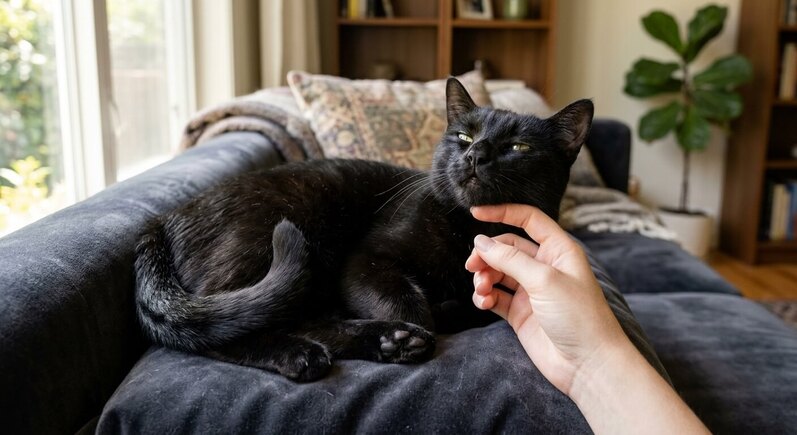
A few simple habits can make petting more enjoyable for both of you.
Let your cat initiate contact. Offer your hand calmly and allow your cat to approach or rub against it. Avoid reaching suddenly toward the face of a cat that seems uncertain.
Use gentle pressure. Start with light strokes beneath the chin or along the cheeks. Avoid pressing hard or repeatedly rubbing one small area.
Keep the first interaction brief. After a few seconds, pause and see whether your cat moves closer or invites you to continue. This gives your pet a chance to make a choice rather than having affection imposed on them.
Respect individual preferences. If your cat moves away, flattens its ears, stiffens, or shows other signs of discomfort, stop. Never hold a cat in place to continue petting.
Notice changes in sensitivity. If your cat suddenly reacts painfully to chin or facial contact, or develops swelling, redness, bad breath, or difficulty eating, arrange a veterinary examination. Oral pain and other medical problems can make touching the face uncomfortable.
Turning Everyday Touch Into a Stronger Bond
Chin scratches may seem like a small part of life with a cat, but these quiet interactions offer an opportunity to learn your pet’s preferences. Some cats seek frequent affection, while others feel most comfortable with brief contact and plenty of personal space.
By observing body language, allowing your cat to initiate contact, and stopping when they show signs of discomfort, you can make petting a more positive experience. Over time, respecting these small signals helps create a relationship built on familiarity, choice, and trust.
The next time your cat approaches and lifts its chin, offer a gentle scratch if they seem comfortable. If they lean in and ask for more, enjoy the moment. If they walk away, let them go. Understanding that difference is an important part of caring for a happy, confident cat.
Ontaryo articles are collectively researched, written, and maintained by our editorial team to help you keep your pets healthy and happy. Read our editorial policy.
Comments
One response
[…] can also learn more about feline body language and affectionate interactions in our guide, Why Cats Love Chin Scratches. Understanding where cats enjoy being touched can help you make everyday interactions more […]