

Why Dogs Love Burrowing Under Blankets and How to Make Them Cozy
If you’ve ever searched the living room only to find a suspicious, quiet lump snoring beneath your duvet, you are not alone. Pet parents everywhere often wonder why dogs love burrowing under blankets and whether this cozy behavior is completely normal. From tiny Chihuahuas to large Golden Retrievers, many dogs actively seek out dark, enclosed spaces to settle down for a nap.
Understanding your dog’s natural instincts, emotional needs, and temperature regulation helps explain this adorable habit. Let’s explore why dogs burrow under blankets and how you can help your furry friend stay safe and comfortable.
Quick Answer: Why Dogs Burrow Under Blankets
Dogs may burrow under blankets because of their natural nesting instincts, desire for warmth, preference for enclosed spaces, or attraction to familiar scents. For many dogs, a soft blanket provides a comfortable place to relax and feel secure.
When your dog tucks themselves under layers of fabric, they may be creating a cozy den away from household noise, bright lights, or cool drafts. This behavior is usually normal if your dog can move freely and appears relaxed.
However, a sudden increase in hiding or burrowing, especially when accompanied by trembling, panting, or other changes in behavior, may indicate stress, discomfort, or illness.
4 Main Reasons Why Dogs Burrow Under Blankets
1. Instinctive Denning Behavior
Dogs have inherited many behaviors from their canine ancestors, including seeking sheltered places to rest. In the wild, sheltered spaces could offer protection from weather and potential threats. Domestic dogs may still enjoy the feeling of being surrounded by soft materials, even when they have a comfortable bed available.
Some dogs also circle, scratch, or push blankets around before lying down. These nesting behaviors may help them arrange their resting area to their liking.
Every dog is different. Some prefer sleeping under covers, while others feel more comfortable stretched out in an open space.
2. Thermal Comfort and Body Heat
Dogs generally have a normal body temperature of approximately 101–102.5°F (38.3–39.2°C). However, their comfort in different environments depends on several factors, including coat type, body size, age, activity, and the temperature of the room.
Small dogs, short-haired breeds, and some senior dogs may appreciate the extra warmth a blanket provides. A lightweight cover can help a dog stay cozy during chilly mornings or in an air-conditioned room.
Still, dogs can overheat if they become trapped beneath heavy bedding or cannot move away from a warm area. Choose breathable materials and make sure your dog can leave the blanket whenever they want.
3. Seeking Security and Stress Relief
Some dogs burrow when they want a quiet place to rest. A blanket may help block light and reduce minor disturbances, making the dog feel more sheltered.
Dogs that are nervous around unfamiliar visitors, household activity, or loud noises may seek out a familiar resting spot. However, burrowing should not be considered a guaranteed treatment for anxiety, and heavy blankets should not be used to restrain a dog.
If your dog frequently hides, trembles, pants, or seems frightened, try to identify the source of the stress. You can also read our guide on how to bond with your dog for practical ideas on building trust and helping your dog feel secure.
4. Familiar Scents and Bonding
Your blankets and bedding carry familiar household scents, including your own. Since dogs have a highly developed sense of smell, familiar smells may make a resting place feel recognizable and comforting.
This may explain why a dog chooses your duvet instead of a brand-new dog bed. Your bedding is soft, warm, and familiar, making it an appealing place to settle down.
If you prefer to keep your dog off your bed, offer a comfortable alternative with a washable blanket. Placing it in a quiet area may encourage your dog to use their own resting spot.
Is Blanket Burrowing Safe for Every Dog?
For many healthy adult dogs, burrowing under a lightweight blanket is generally safe when they can easily move in and out. However, not every dog or blanket is suitable for this habit.
Keep these safety considerations in mind:
- Flat-faced breeds: Pugs, French Bulldogs, and other brachycephalic dogs may have breathing difficulties. Avoid heavy bedding that could restrict airflow, and supervise them when they burrow.
- Puppies and senior dogs: Very young puppies and dogs with limited mobility may struggle to free themselves from heavy covers. Provide easy access to a safe, open resting area.
- Chewing and swallowing hazards: Avoid blankets with loose threads, tassels, or damaged fabric that your dog might chew and swallow.
- Overheating: If your dog is panting heavily, seems restless, or repeatedly tries to escape from beneath the covers, remove the blanket and help them cool down safely.
- Sudden behavioral changes: If your dog suddenly starts hiding or burrowing much more than usual, particularly alongside appetite changes, pain, or lethargy, contact your veterinarian.

How to Create a Safe Burrowing Spot
If your dog loves burrowing, you can provide a cozy resting area without compromising their safety.
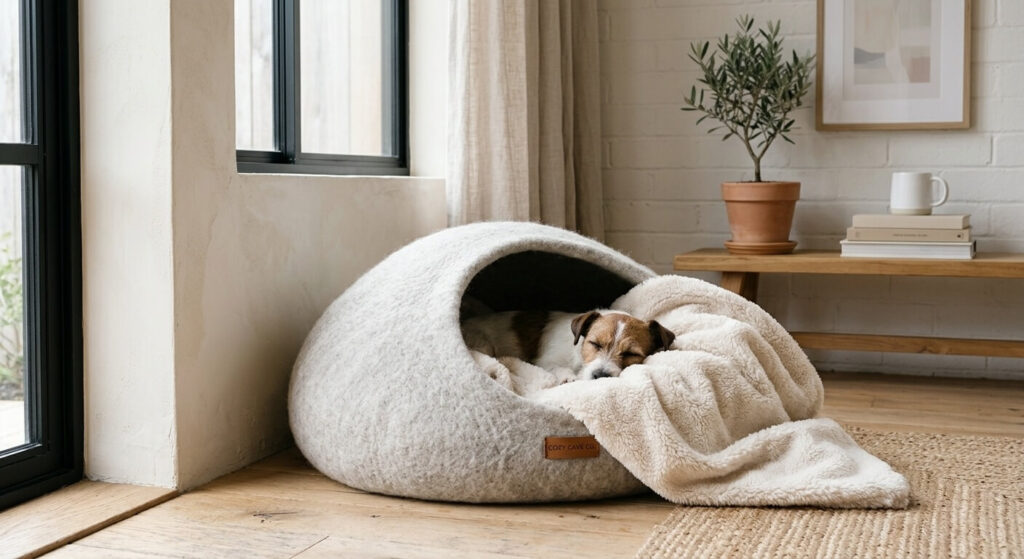
1. Choose breathable fabrics. Use lightweight fleece or cotton blankets that your dog can easily push aside. Avoid heavy weighted blankets and covers that may trap too much heat.
2. Consider a cave-style dog bed. Hooded or cave-style beds provide a sheltered space while maintaining an entrance. Choose a size that allows your dog to enter, turn around, and leave comfortably.
3. Keep bedding clean. Wash your dog’s blankets regularly according to the care instructions. Use a mild detergent and make sure the bedding is fully dry before returning it to the resting area.
4. Offer different resting options. Some dogs prefer enclosed beds, while others like open cushions or cool flooring. Giving your dog a choice allows them to find a comfortable spot as the temperature changes.
5. Make the space peaceful. Place the bed away from busy walkways and loud household appliances. A quiet location can help your dog relax without needing to hide under your duvet.
Providing suitable bedding and enrichment can also help redirect scratching or nesting behavior. For another example of how canine instincts influence everyday behavior, read our guide on why dogs love car rides and how to keep them safe.
The American Kennel Club’s guide to dog digging behavior also explains how digging can relate to instinct, comfort, and other behavioral needs. Understanding the reason behind a behavior can help you choose a suitable way to manage it.
What Every Dog Owner Should Remember
- Burrowing is often normal: Dogs may seek blankets for warmth, comfort, familiar scents, or a sheltered place to rest.
- Let your dog move freely: Make sure your dog can easily leave the blanket and is never trapped under heavy bedding.
- Choose safe materials: Lightweight, breathable blankets and suitable dog beds are better options than thick weighted covers.
- Watch for signs of stress: Frequent hiding or sudden behavior changes may require closer attention.
- Know when to ask for help: If burrowing occurs alongside breathing difficulties, unusual tiredness, pain, or other concerning symptoms, contact your veterinarian.
By supporting your dog’s natural desire to nest, you can provide a cozy and secure place to rest while keeping their comfort and safety in mind. A suitable blanket, a quiet resting area, and the freedom to move away whenever necessary can make burrowing a pleasant part of your dog’s daily routine.
Ontaryo articles are collectively researched, written, and maintained by our editorial team to help you keep your pets healthy and happy. Read our editorial policy.
Comments
One response
[…] Provide Blankets: Soft fleece or thermal blankets allow your puppy to burrow and stay warm while sleeping. You can read more about this natural behavior in our dedicated guide on Why Dogs Love Burrowing Under Blankets (And How To Make Them Cozy) […]